Designers
Jingyuan Huang
Year
2026
Category
Concept
Country
United States
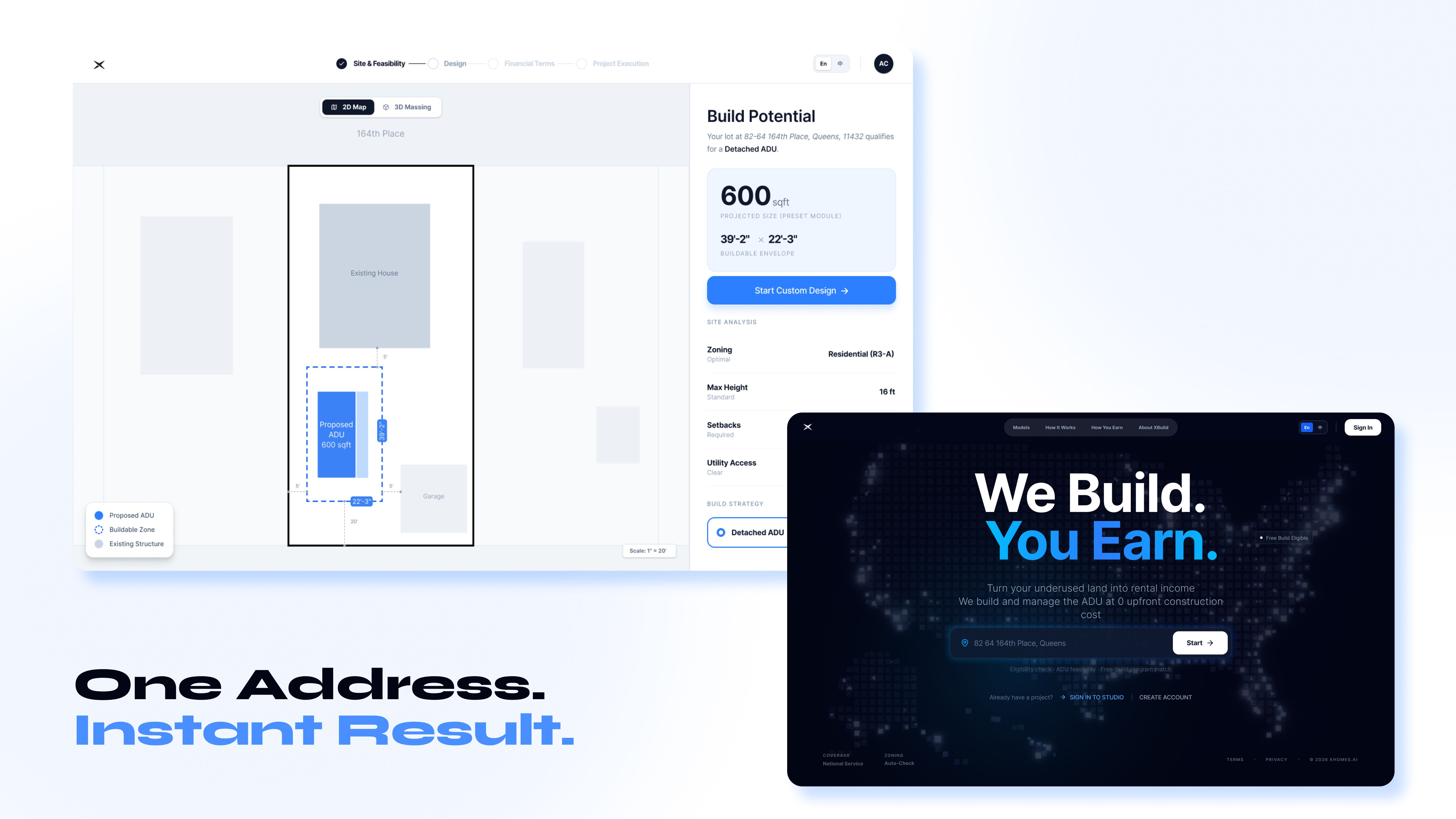
»Xbuild transforms the complex and often inaccessible process of residential development into a transparent, understandable, and actionable experience. It addresses a clear need: many homeowners have both the means and the interest to build an accessory housing unit but are discouraged by regulatory uncertainty and delivery risks. The jury was particularly impressed by the credibility of the approach. Instant eligibility assessments – including a “Not Buildable Yet” outcome – build trust through transparency. By guiding homeowners from initial evaluation through planning, financing, construction, and operation in one integrated system, Xbuild makes technical, legal, and financial complexities accessible at every stage.«
UX Design Awards Jury, Autumn 2026
And the award goes to...
Three questions to the project team
What was the particular challenge of the project from a UX point of view?
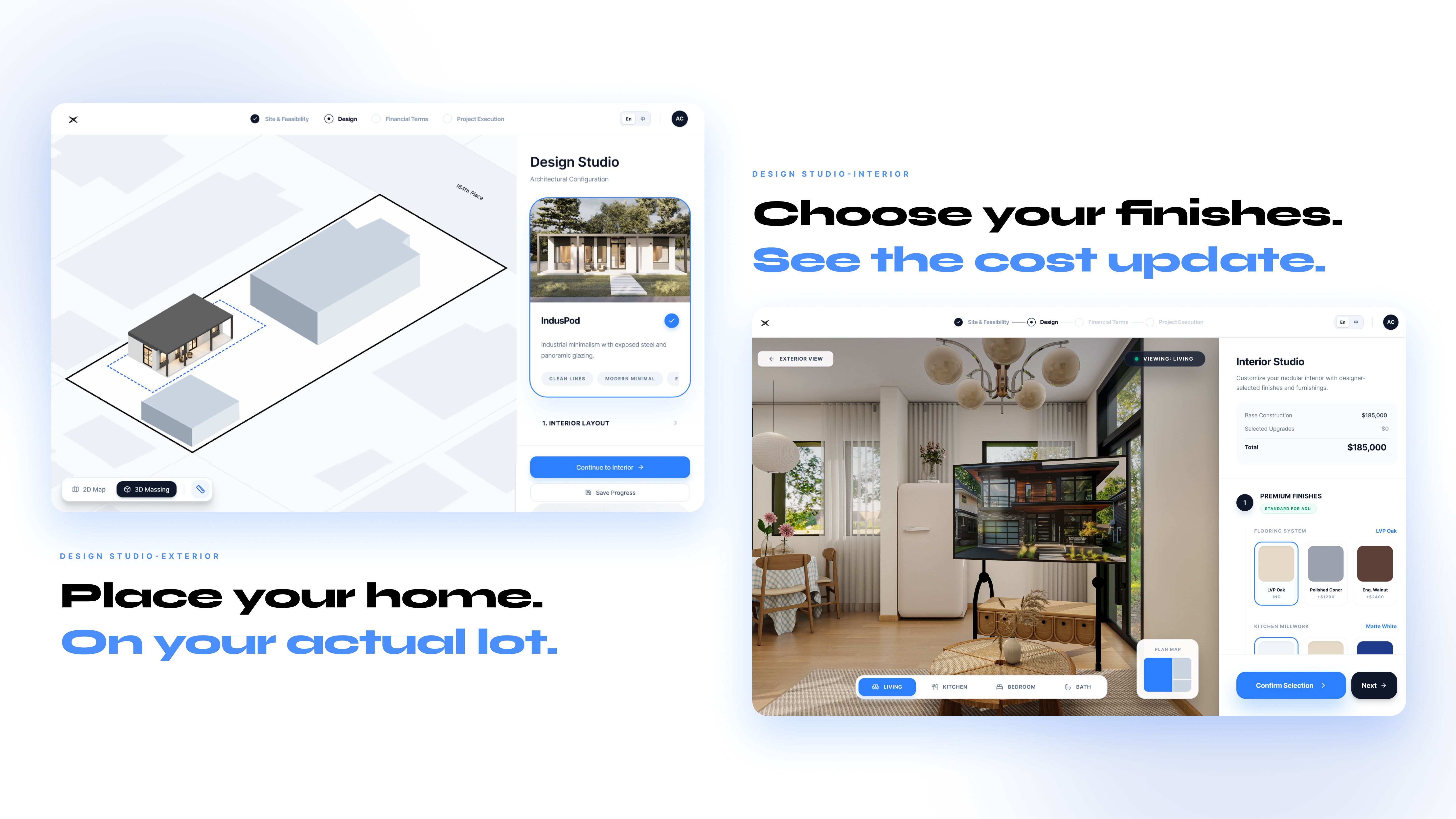
From a UX point of view, the main challenge was turning a professional and fragmented ADU development process into something homeowners could understand early on. Most owners are not looking for technical documents at the beginning. They simply want to know: Can I build here? What are my options? Is it worth moving forward? The intelligent use of AI in XBuild is not about replacing experts or approvals. It helps organize early site information, interpret zoning logic, identify key constraints, and translate them into a visual site plan, buildable zone, and guided next steps. The goal was to reduce uncertainty, so users can understand where they are in the process, why a result is shown, and what each decision may affect.
What was your personal highlight in the development process? Was there an aha!-moment, was there a low point?
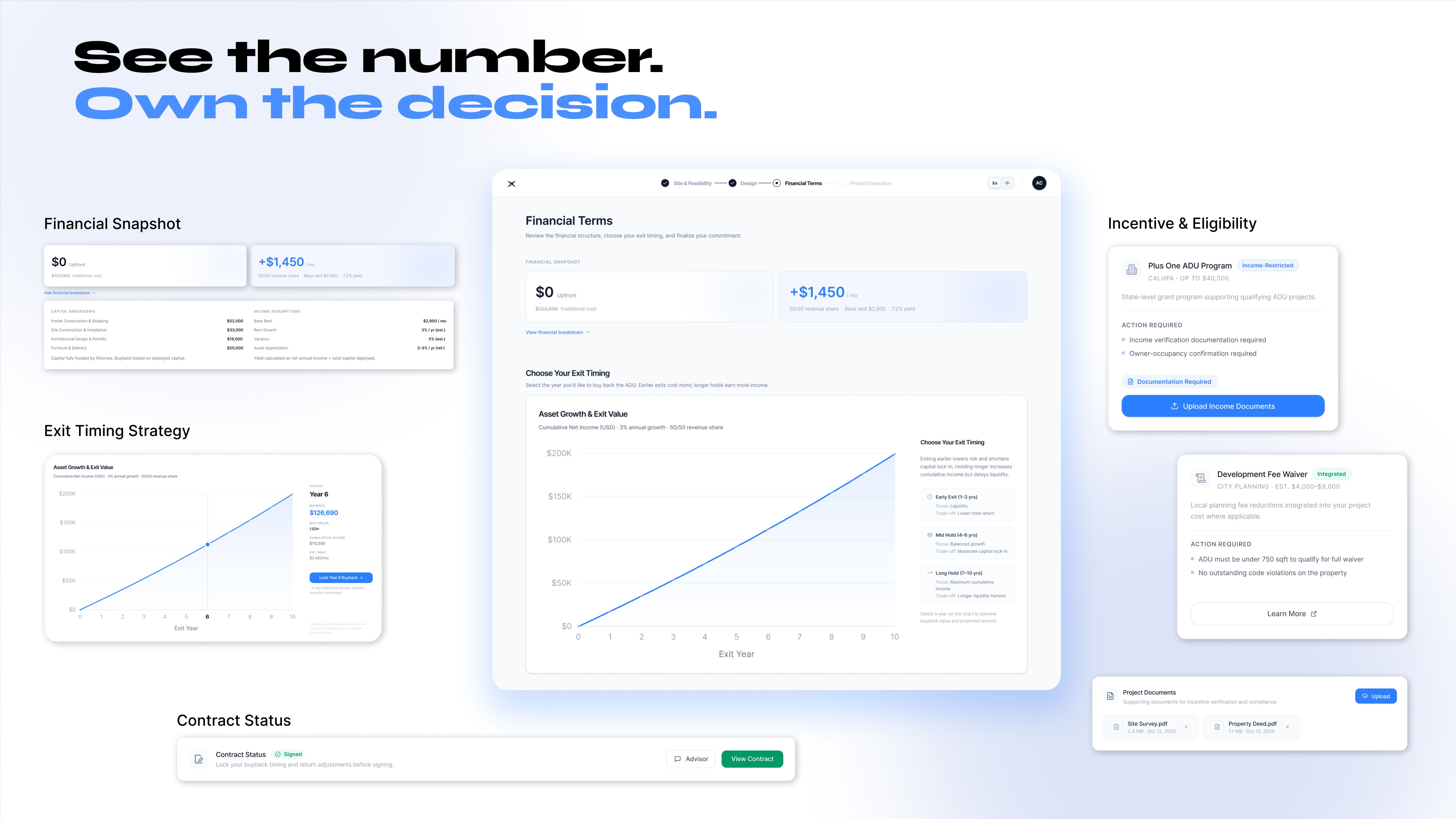
The highlight was seeing the product evolve from separate features into one connected journey. At first, feasibility, design, cost, and construction felt like different steps. The aha moment was realizing how dependent they are: a setback changes placement, placement changes layout, layout changes cost, and cost affects whether an owner moves forward. That changed the way we designed XBuild. Instead of helping users complete one task, the product uses AI to connect early site signals, rule-based checks, and user choices, so each stage builds on the last and users never feel they are starting from zero again.
Where do you see yourself and the project in the next five years?
In the next five years, I see XBuild growing beyond a homeowner-facing ADU tool into a broader decision-support system for small-scale residential development. It could serve property owners, builders, developers, and public agencies through B2C, B2B, and B2G models. For governments, the same system could help make early housing feasibility clearer, reduce low-quality inquiries, and support more informed conversations around infill housing, ADUs, duplexes, and lot splits. Personally, I want to keep building tools that connect spatial design, regulation, AI, and delivery — making housing development more transparent, accessible, and beneficial to more people.