Designers
Yumin Kim
Year
2026
Category
New Talent
Country
Korea, Republic
School
Pusan National University
Teacher
Jeongju Choi
Three questions to the project team
What was the particular challenge of the project from a UX point of view?
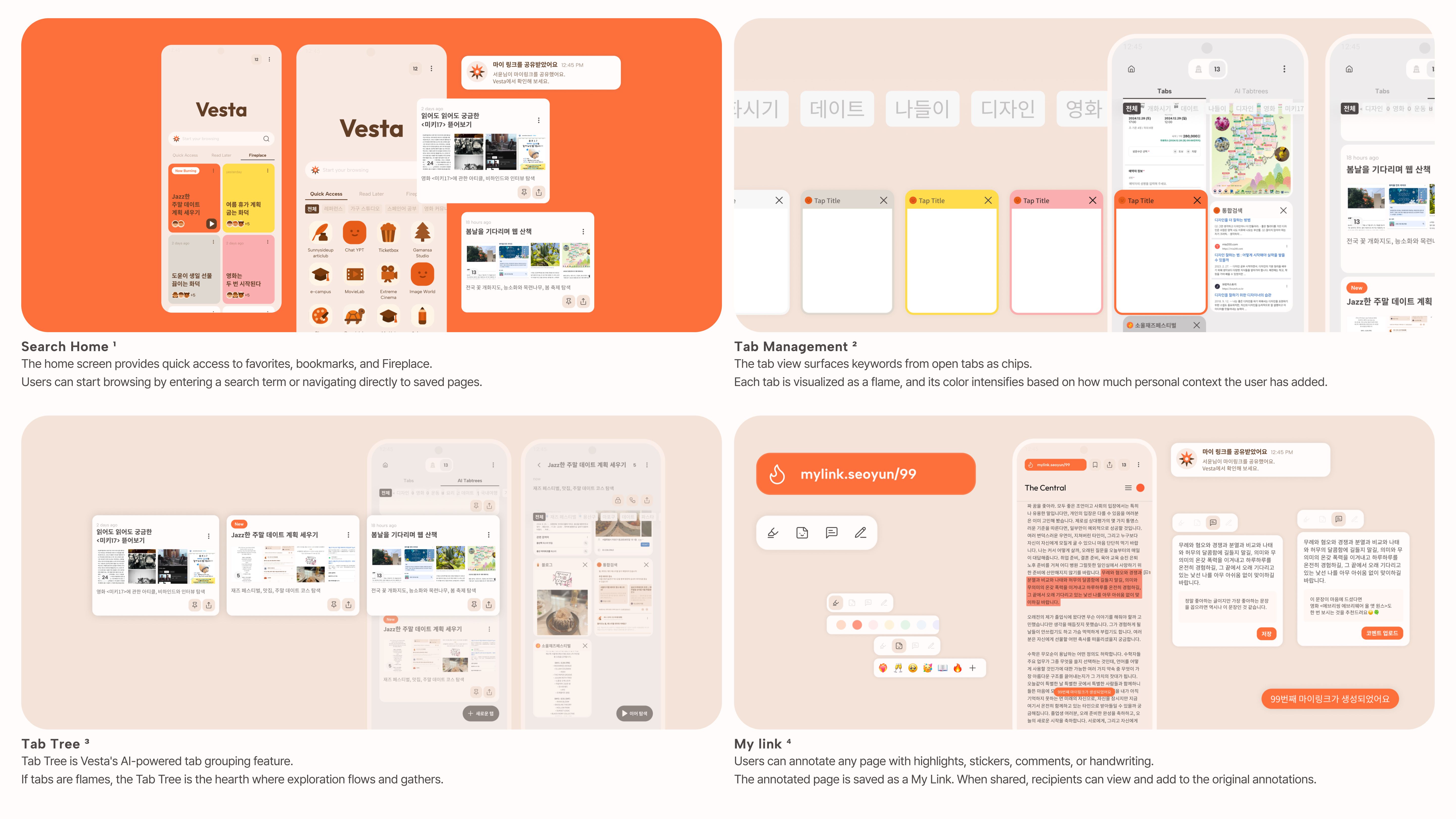
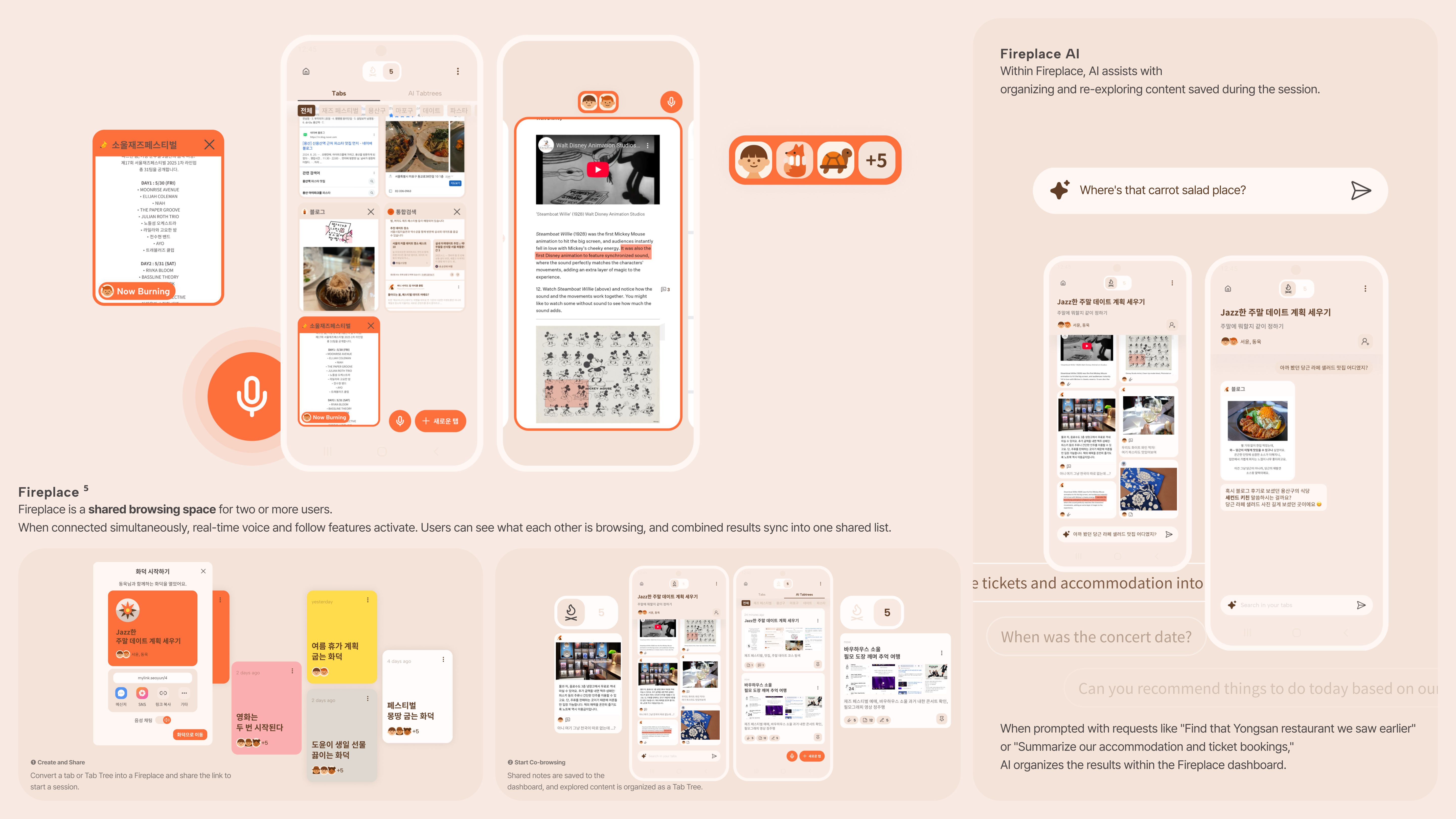
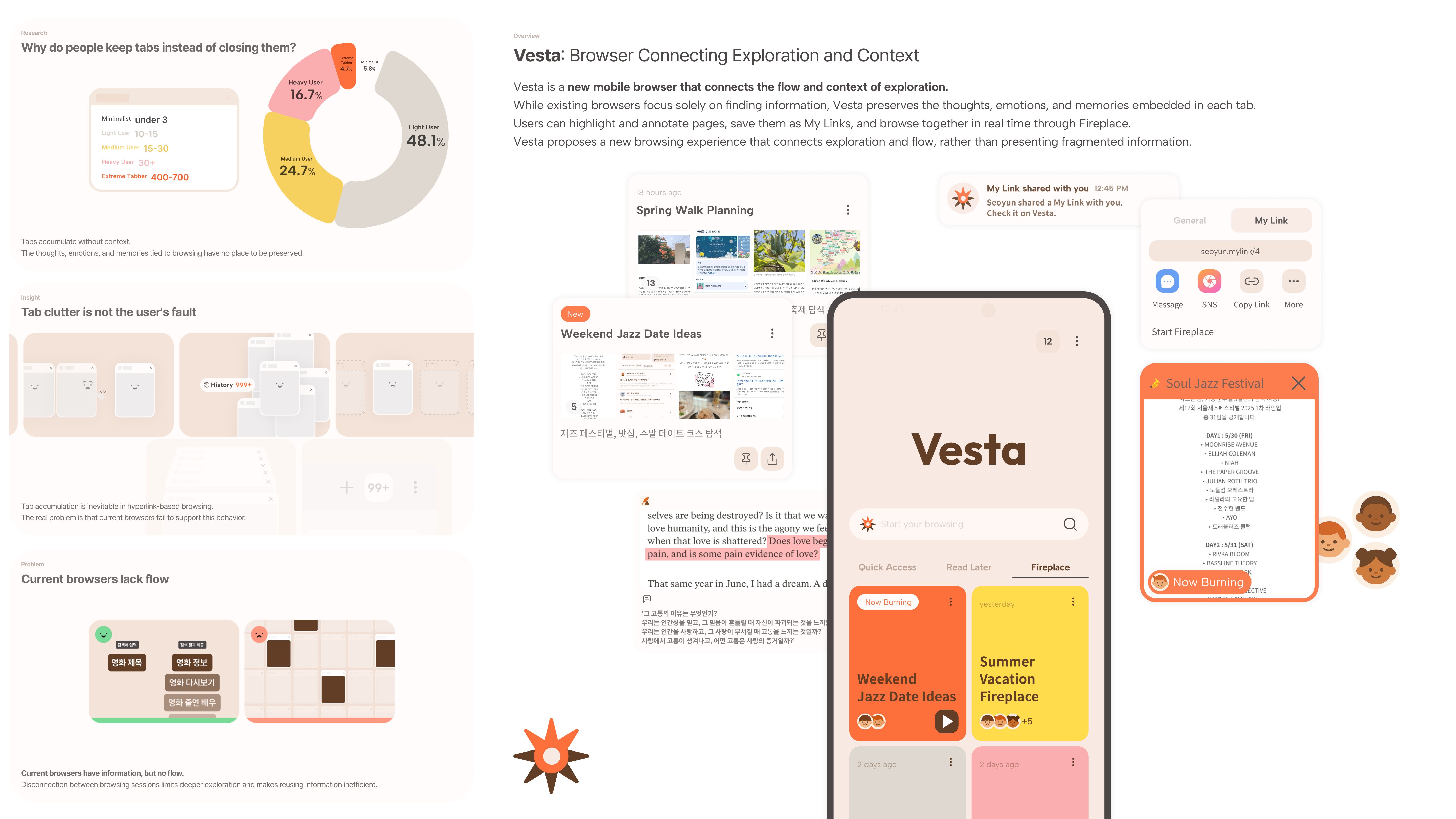
The hardest challenge was resisting the wrong problem. The obvious framing was tab management: users have too many tabs, so give them better tools to organize them. But our research resisted that. Users kept hundreds of tabs open not because they lacked structure — but because closing a tab felt like losing something: an intention, a memory, a thought. The other challenge was restraint around AI. Everyone is applying generative AI to everything, and we had to be honest about where it earns its place. Tab Tree uses AI because clustering exploration context is genuinely hard to do manually. Annotation and sharing do not need AI — they need the right interaction design. Knowing the difference was harder than it sounds.
What was your personal highlight in the development process? Was there an aha!-moment, was there a low point?
The low point came early, staring at an affinity diagram full of pain points with no clear direction. The aha moment came from one participant who said she could not delete her Japan trip tabs because they looked like the flow of the journey. Tabs are not just navigation, they are memory. The personal highlight was quieter. I came in as someone who clears every tab immediately, looking for problems to fix. What I found was that people were projecting themselves into their browsers without realizing it. Someone with tabs on street fashion, Japanese travel, summer weather in Fukuoka, you do not know their name, but those tabs tell you something honest about who they are. I went in looking for friction. I came out having found people.
Where do you see yourself and the project in the next five years?
In five years, I hope Vesta has moved from concept toward reality — not as a standalone browser, but as ideas that have shaped how browsers are built. The ambition is that the question Vesta asks becomes standard: what happens to the meaning behind a search after it ends? But underneath the project is a simpler belief. No technology makes a person happy if they have lost who they are. Vesta preserves the context behind browsing because that context is part of how people know themselves — what they were curious about, what they cared enough to save, where their attention actually went. I want to keep designing things that work in that direction. Tools that help people stay close to who they are.