Designers
Siemens: Eliza Rangelova / CaderaDesign: Katinka Melichar, Elisabeth Scheer
Year
2026
Category
Product
Country
Germany
Design Studio / Department
CaderaDesign GmbH
»Hospital patients are among the most vulnerable technology users. They may be in pain, exhausted, anxious, or unable to process complex information. More healthcare products should prioritize designing for them. This one does. Accessibility is the starting point, not an afterthought. Three years of research and validation in real hospital environments resulted in a calm, clear, and considered interface exactly when patients need it most. Designing for the most vulnerable is not charity. It's simply how healthcare should work.«
UX Design Awards Jury, Autumn 2026
And the award goes to…
Three questions to the project team
What was the particular challenge of the project from a UX point of view?
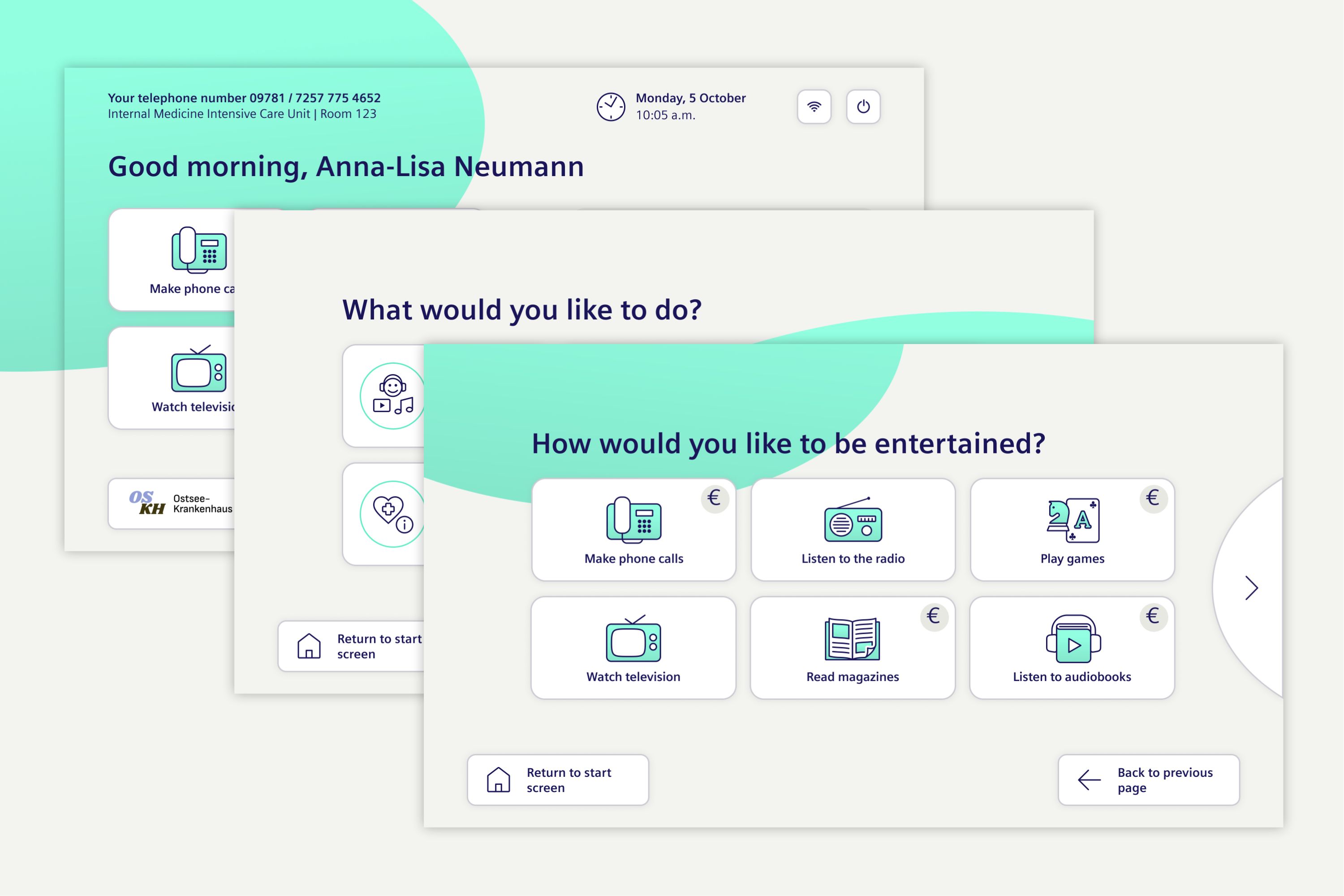
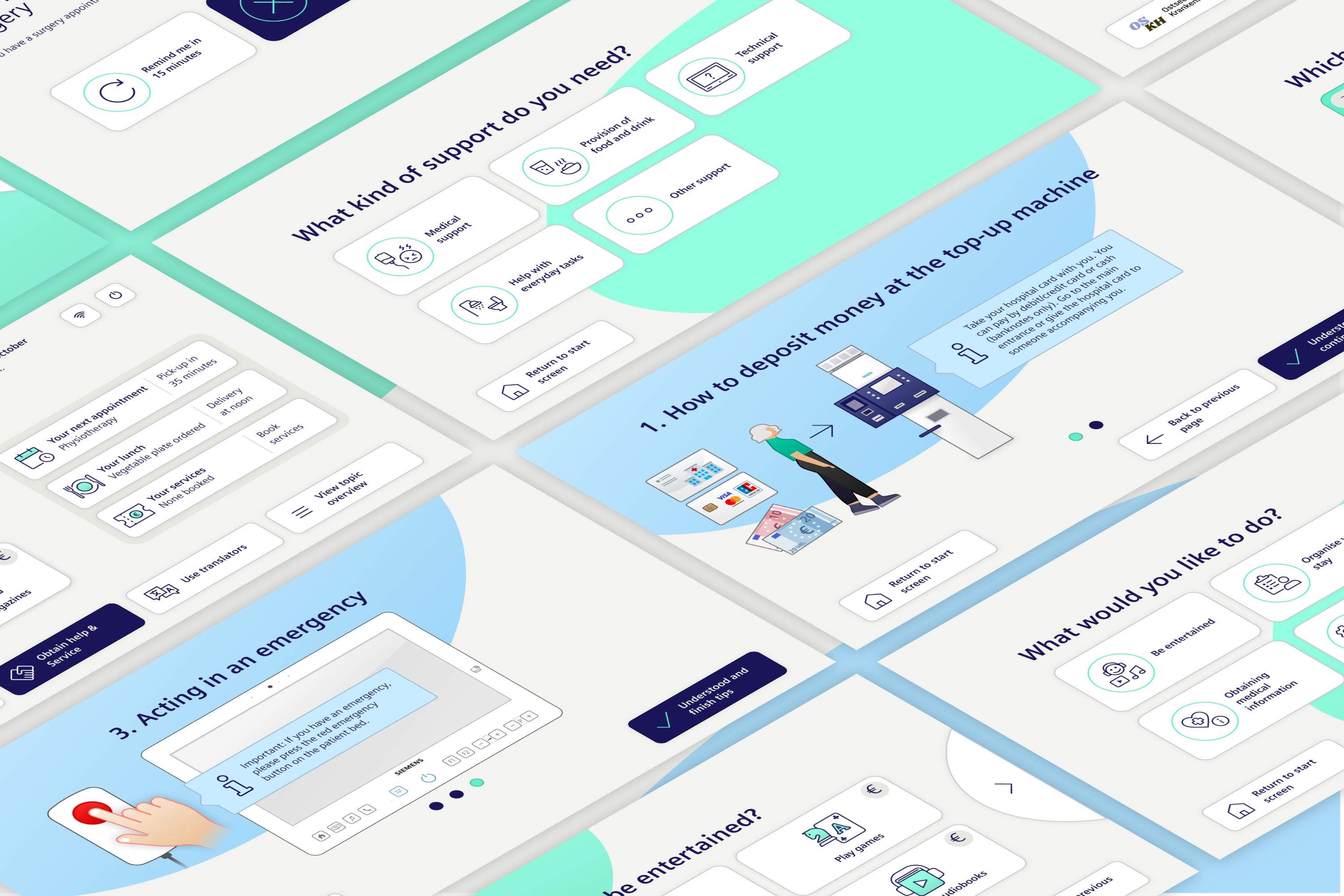
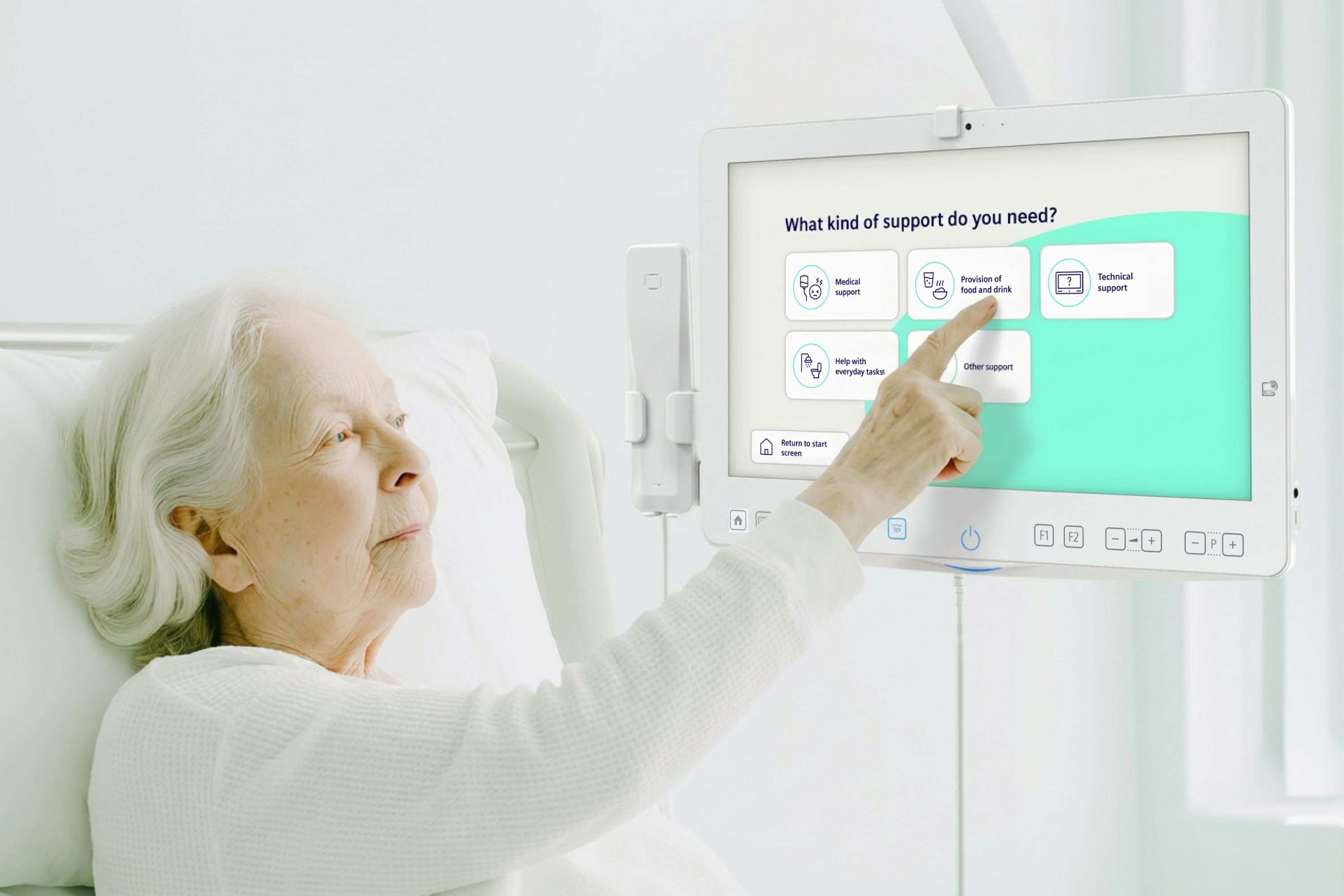
The main UX challenge was designing for patients under extreme conditions: users who are often tired, in pain, cognitively limited, or unfamiliar with digital systems. The interface had to support users with visual, motor, and language limitations. To better address especially older users, we deliberately extended interaction flows in order to simplify them. By breaking down tasks into clear, guided steps, we were able to lead patients through processes step by step without overwhelming them. This shift from efficiency-driven to clarity-driven design.
What was your personal highlight in the development process? Was there an aha!-moment, was there a low point?
Our biggest aha! moment was discovering how different user behavior can be from what users say. Especially digitally experienced users told us they wanted direct access to many functions and familiar smartphone patterns. In usability tests, however, they consistently preferred simpler, more guided experiences that reduced complexity and provided orientation. A challenging moment was finding the right visual design. We initially assumed stronger use of color would help users distinguish functions and apps. Testing showed the opposite: users valued calmness, clarity, and consistency far more than visual differentiation.
Where do you see yourself and the project in the next five years?
In the next five years, we see the HiMed Cockpit evolving into a standard platform for patient-centered interaction in hospitals, further integrating digital services and supporting personalized care journeys. Beyond healthcare, the project demonstrates a broader design principle: when systems are designed for people under stress, uncertainty, or limited digital confidence, they become better for everyone. We believe this mindset will increasingly influence how digital products are designed across a wide range of domains.