Designers
Shaivy Bhatia
Year
2026
Category
New Talent
Country
United Kingdom
School
Kingston University
Teacher
Jay Kiruthika
Three questions to the project team
What was the particular challenge of the project from a UX point of view?
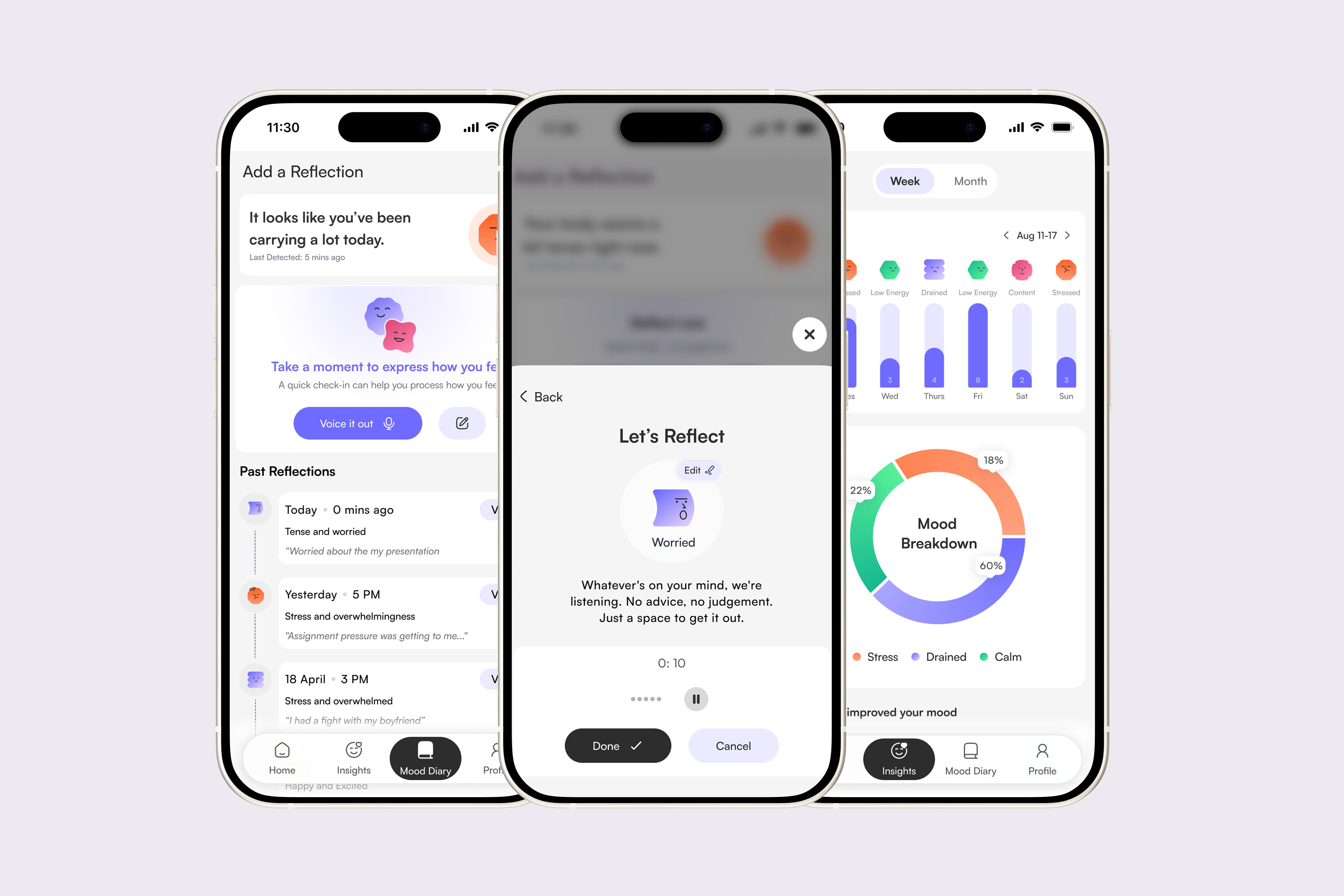
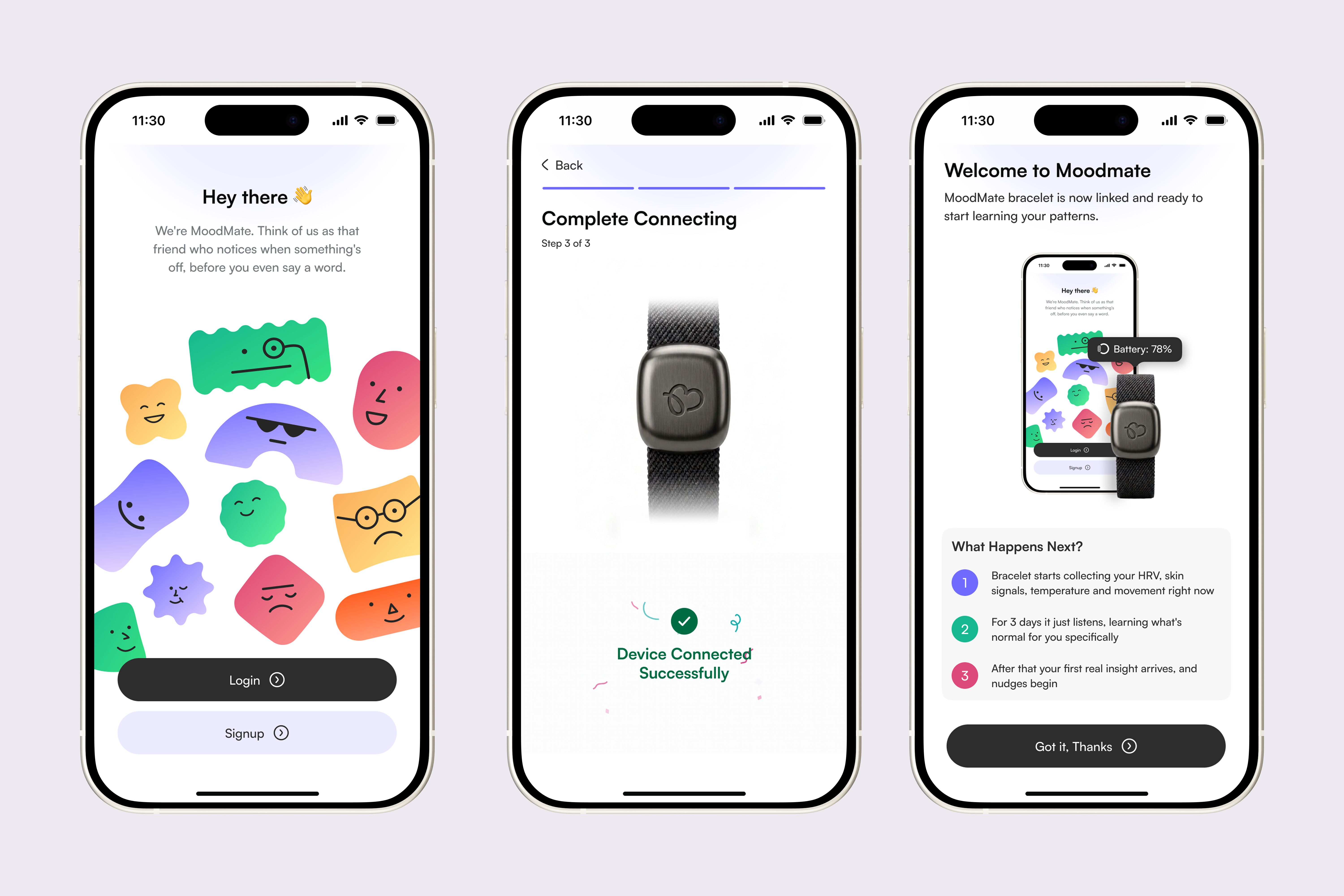
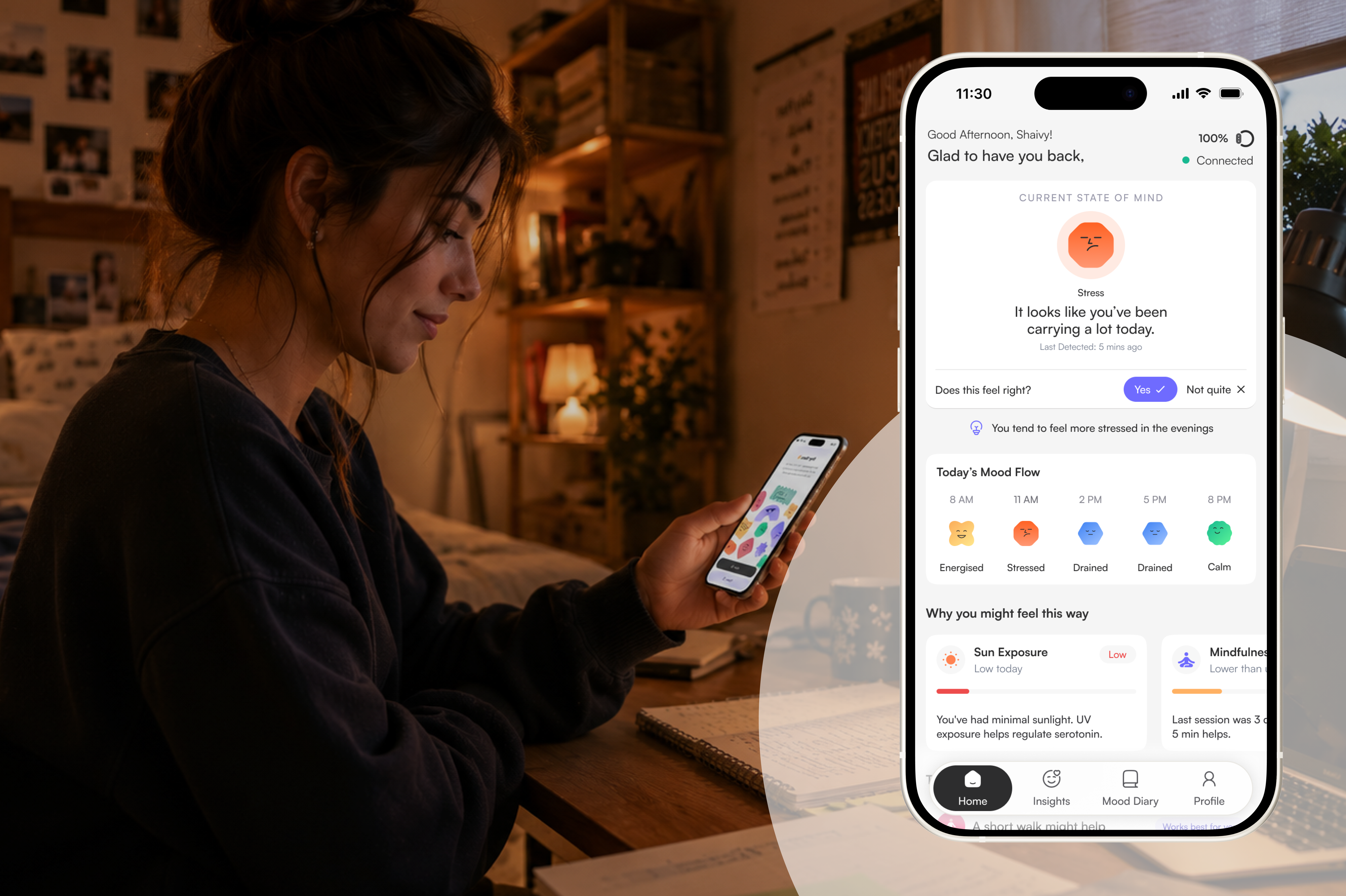
The core challenge was designing for users at their lowest capacity. Existing tools ask users to log, reflect, and engage at the exact moment stress has depleted the energy to do any of it. The UX problem was not adding features but removing effort entirely, while still delivering meaningful support. Every decision had to work for someone who is overwhelmed, distracted, and unwilling to engage. Moreover, making them aware and working towards coping. This meant detecting emotional states passively, explaining them in plain language, and surfacing personalized coping in a single tap, all without ever feeling clinical or demanding. Designing warmth and intelligence into something that asks nothing of the user was the hardest balance to strike.
What was your personal highlight in the development process? Was there an aha!-moment, was there a low point?
The aha moment came during the expert interview, when the psychologist validated that passive mood tracking, personalized coping mechanisms, and emotion awareness together increase recovery likelihood. That confirmed the app's core features were clinically grounded. During usability testing, seeing users navigate the app with ease and hearing them say it felt like something was finally watching out for them, that it made understanding their mental health feel simple and within reach, was the moment it all clicked. The low point came when users flagged confusing communication in the voice expression flow. We refined the wording, tone, and improved the journey, and added modalities, which made it more user-focused and easy to use.
Where do you see yourself and the project in the next five years?
In five years, I see Moodmate as a real device, making mental wellbeing scalable. The features would grow too: an AI reflection layer that learns emotional themes across entries, multimodal sensing that adds vocal and facial signals, and a social presence feature where paired bracelets send gentle haptic nudges to reduce isolation. I would integrate it with university wellbeing services, so it lowers the threshold for students to seek help before crisis, backed by longitudinal research proving it improves wellbeing over time. Personally, I see myself continuing to design at the intersection of emotional wellbeing and emerging technology, building products that disappear into people's lives and arrive exactly when needed.