Designers
Ramona Dusey Ahmed
Year
2026
Category
New Talent
Country
Sweden
School
Stockholm Institute of Technology
Teacher
Jenny Carlsson
Three questions to the project team
What was the particular challenge of the project from a UX point of view?
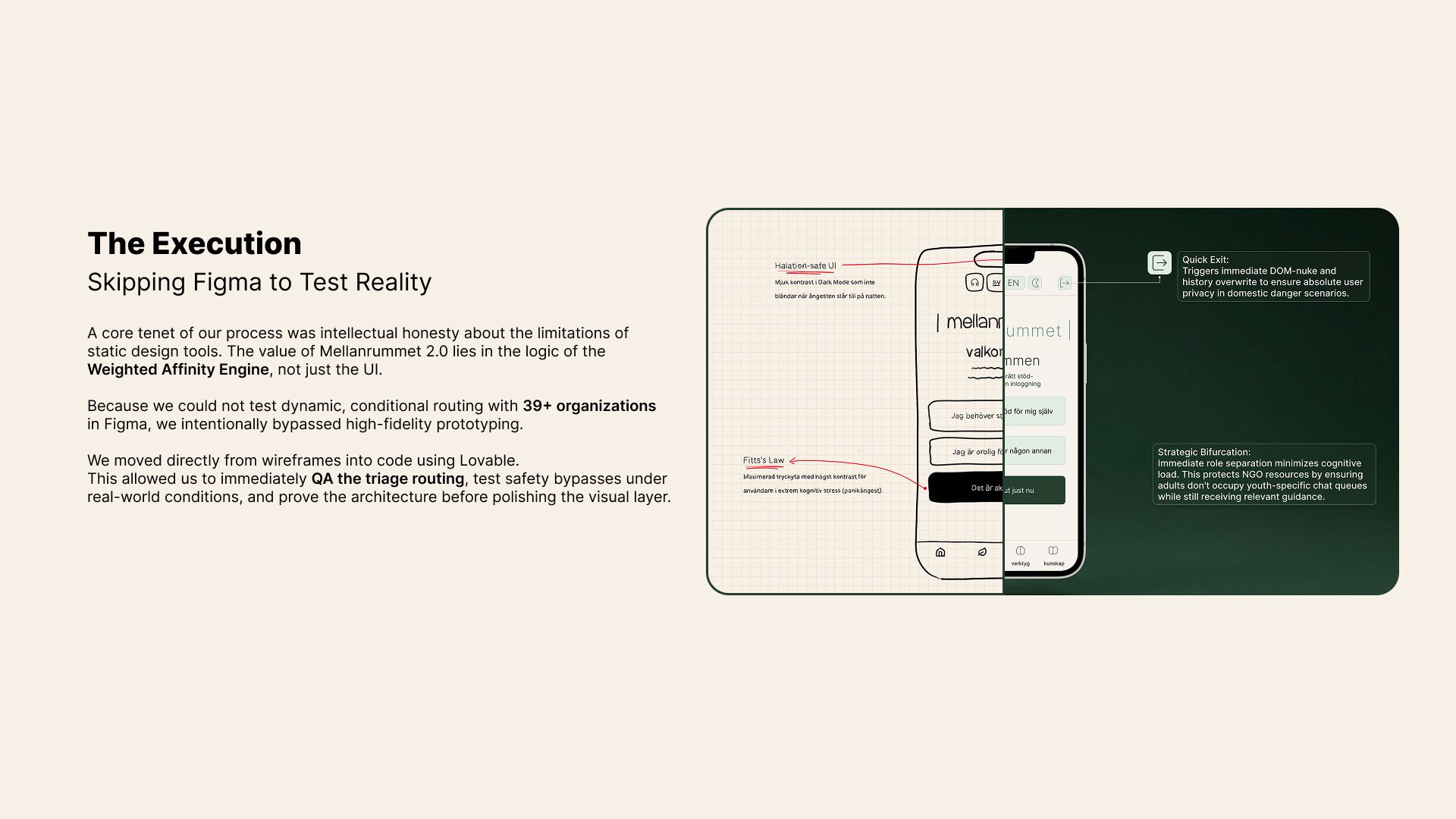
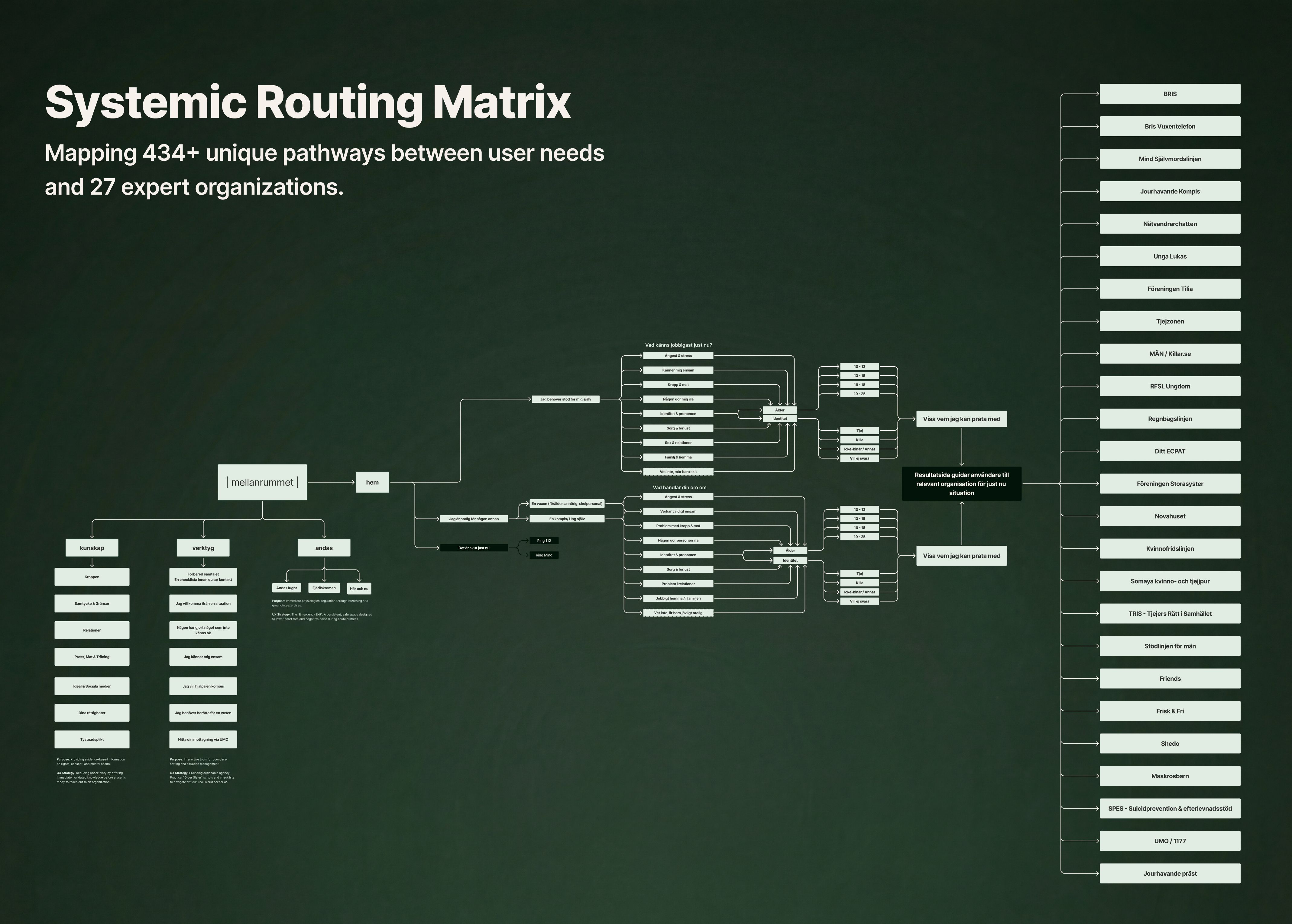
The primary challenge was designing for tunnel vision, the cognitive narrowing that occurs during acute stress. From a UX perspective, this meant stripping away traditional navigation patterns that require high agency and replacing them with a trauma-informed Router of Care. I had to balance the clinical necessity of categorizing 39+ organizations with a Visual Whisper aesthetic that actively reduces anxiety. Shifting the burden of choice from a user in crisis to a weighted affinity engine required extreme precision in information architecture, ensuring that every click felt like a hand to hold rather than a hurdle to jump.
What was your personal highlight in the development process? Was there an aha!-moment, was there a low point?
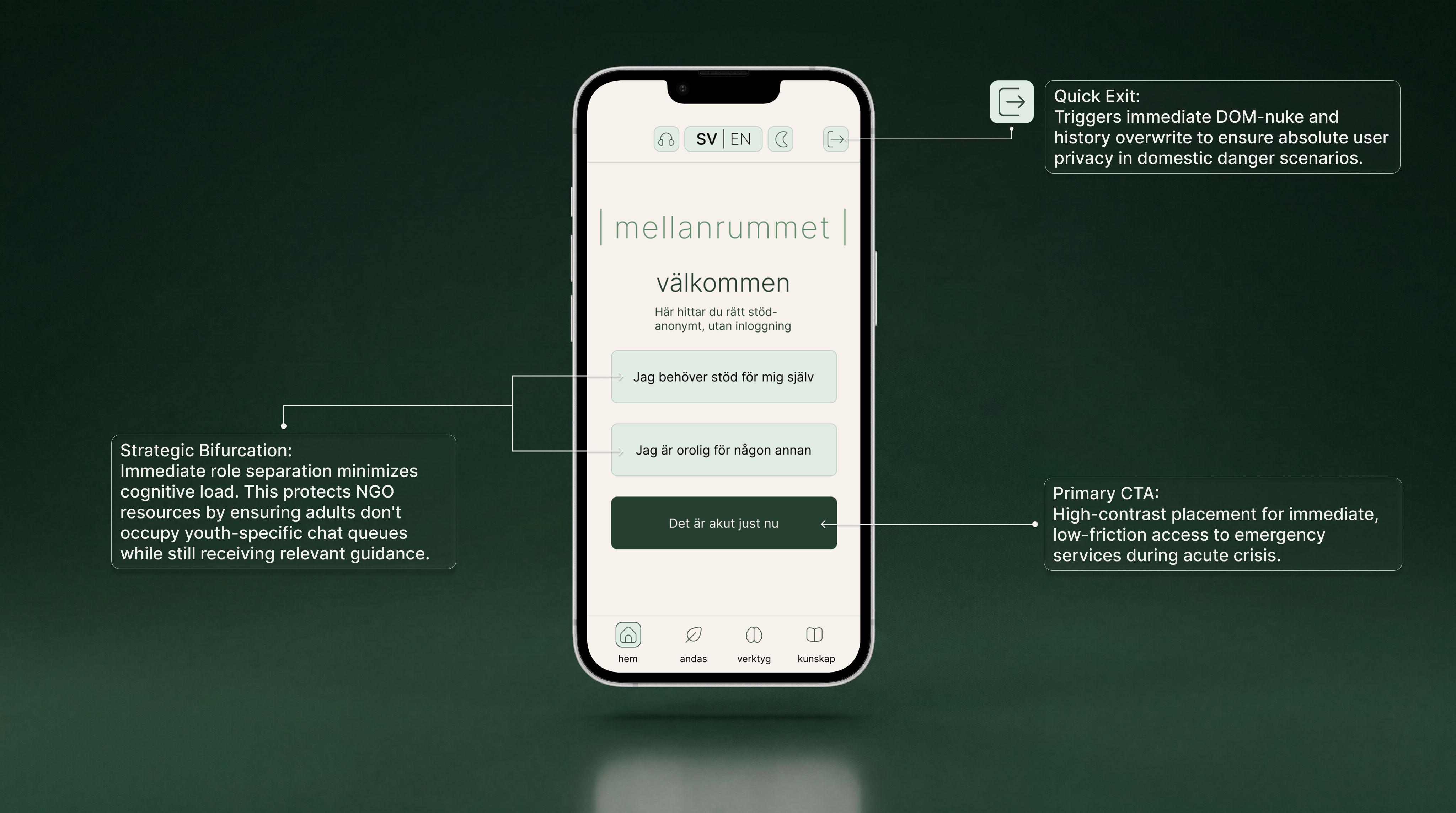
The 'aha!' moment came when I realized the existing system forces teenagers to diagnose themselves before they can find the right help. Expecting a youth in a panic attack to know the difference between 'clinical anxiety' and 'situational stress' to navigate a menu is a systemic failure. This realization drove me to build a system that takes on the burden of triage, using a weighted affinity engine to match symptoms to organizations. A personal highlight was engineering the 'Quick Exit' bypass—a small technical feature that represents a massive shift in safety for users in shared physical spaces. The low point was confronting the sheer scale of the care gap, but it fueled my determination to automate empathy.
Where do you see yourself and the project in the next five years?
In five years, Mellanrummet 2.0 should be the national digital standard for youth triage in Sweden, bridging the gap between NGOs and public healthcare. I see the project expanding its ecosystem to include adult support organizations, creating a 'Unified Front Door' for anyone in crisis. Personally, I aim to lead the shift toward agentic UX—where systems don't just present data, but actively anticipate and assist users in distress. I want to continue proving that AI’s greatest value in UX isn't just efficiency, but its ability to provide silent, scalable empathy for those overwhelmed by a fragmented system.