Designers
Jiayi Huang, Yiming Xia, Qizi Yu, Zhengdong Peng
Year
2026
Category
New Talent
Country
United States
School
University of Michigan
Teacher
Matthew Bui
Three questions to the project team
What was the particular challenge of the project from a UX point of view?
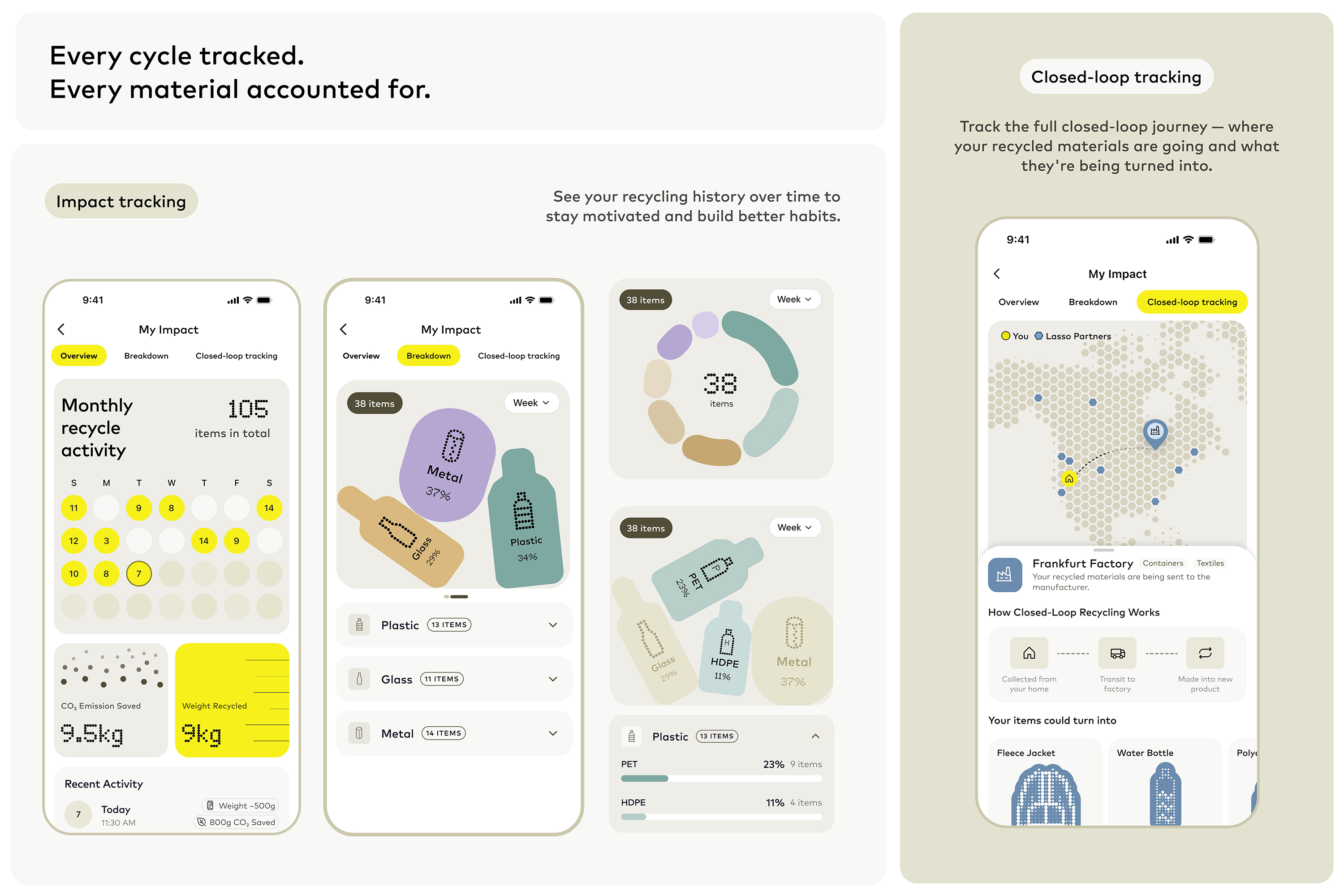
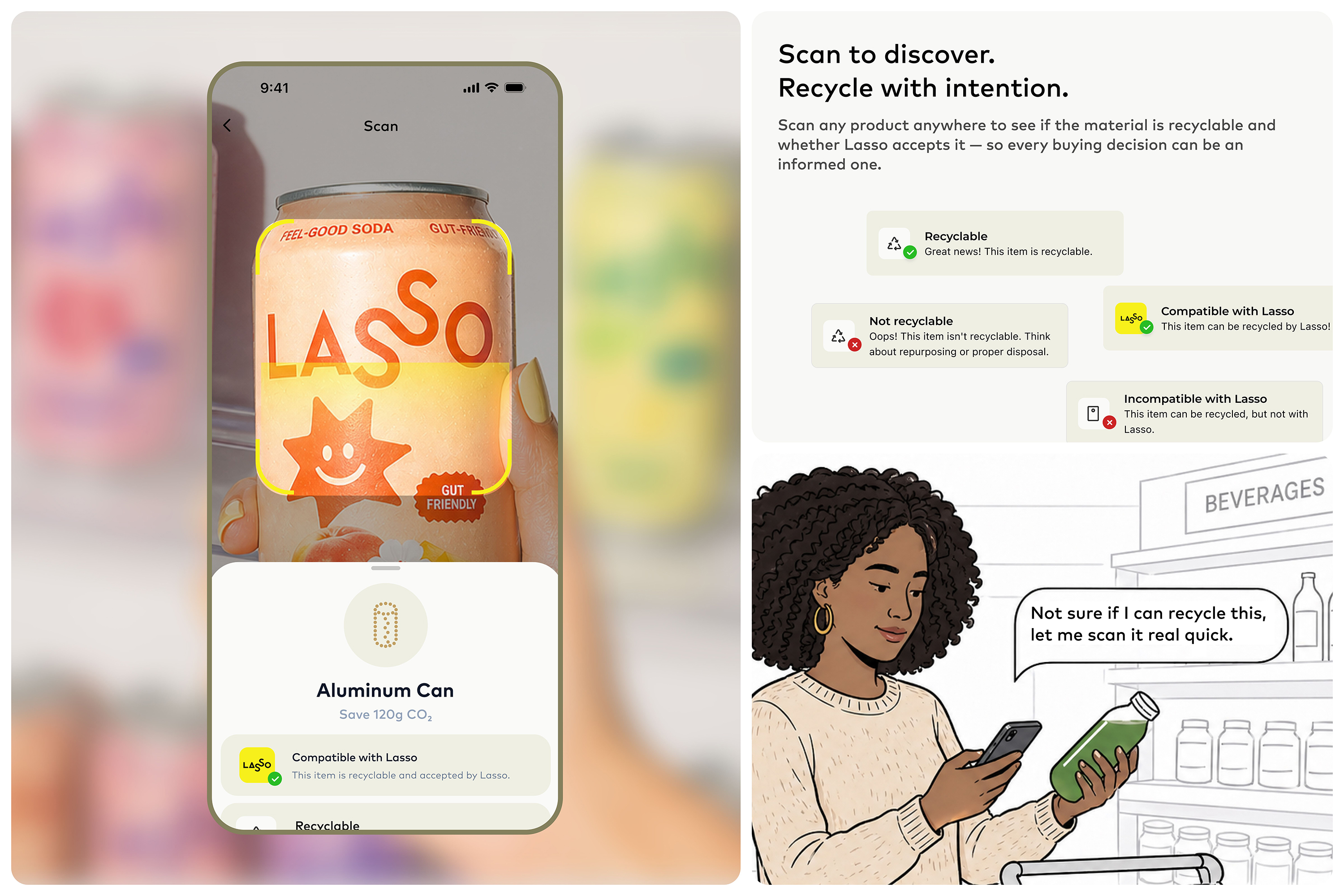
Lasso is an entirely new product category in home recycling, with no competitors and no mental models to draw on. Every user is a first-time adopter, learning the appliance and the app at the same time. Because the product had not launched, we could not recruit real users, so we researched proxy groups and current behavior, not hypotheticals, to limit bias. The harder challenge was depth: a new category carries a lot to explain, but people engage at different levels. Some want a simple, guided experience, others want to understand how the system works and what happens to each material. So the task was one experience that holds both: an approachable core for everyday use, with deeper detail for those building trust through transparency.
What was your personal highlight in the development process? Was there an aha!-moment, was there a low point?
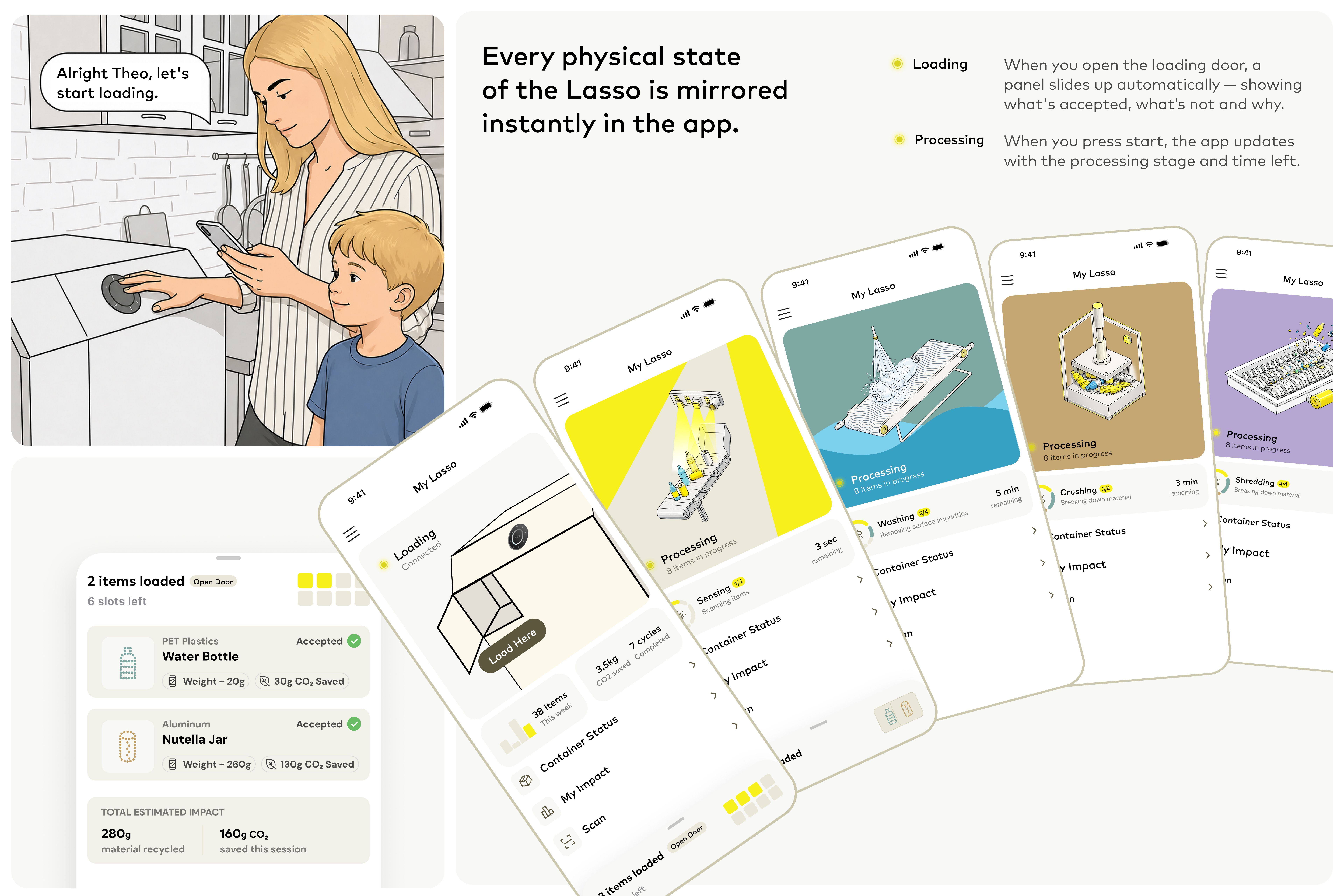
Our low point came in usability testing. We had organized the app by feature relevance, but people could not find what mattered. Tabs were overloaded, and tasks broke when switching tabs. We realized Lasso should not behave like a conventional app organized around categories. It needed to be a companion to the appliance, responding to its current state and guiding users to the most relevant action. So we tore up the architecture and removed the bottom menu. Leaving a pattern every app uses felt risky, but it became our high point. The new layout feels more appliance-like, and people reach their tasks faster. Strong UX isn't always about following familiar patterns. Sometimes it's about building the right mental model for a new product.
Where do you see yourself and the project in the next five years?
Right now, Lasso sits in a category that didn't exist before, and we got to define what it even looks like. But we see this as a starting point, not the finish. Once the pilot ships, the real work begins: we watch how people use it and iterate on their feedback. The biggest move is opening the app beyond one user. Today it serves adults at home, but homes also include older relatives and kids, so accessibility moves up and the design has to fit them too. We also look forward to a stronger demo mode that lets people experience Lasso before they own it, and a rewards layer that motivates people to recycle. Five years out, we want Lasso to be the app people picture when they think about recycling, and we want to still be shaping it.