Designers
Suien Ma
Year
2026
Category
New Talent
Country
China
School
Harrisburg University of Science and Technology
Teacher
Sa Liu
Three questions to the project team
What was the particular challenge of the project from a UX point of view?
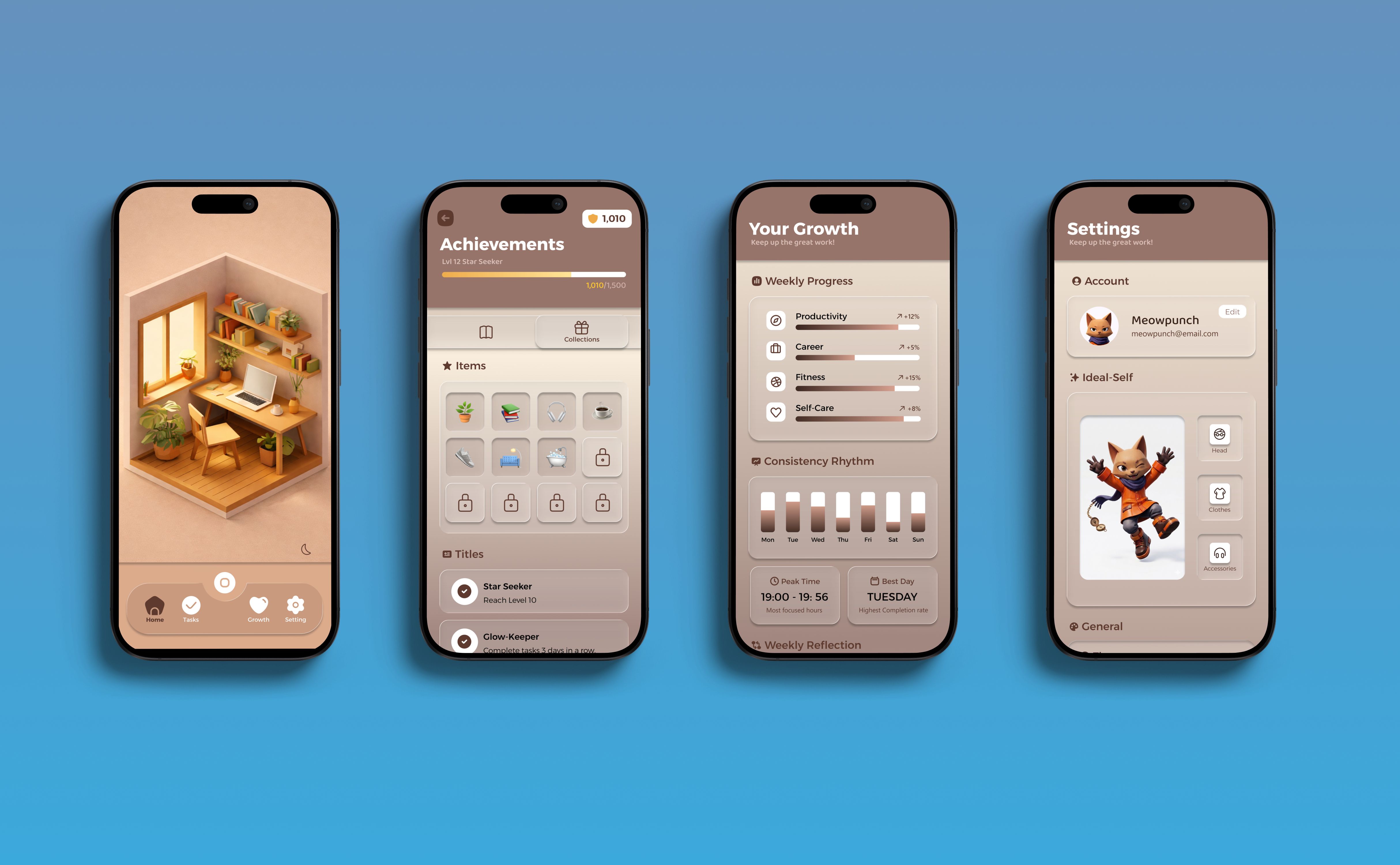
The challenge was figuring out how to help users start tasks without making the app feel like another source of pressure. My research shows that procrastination is not only a time-management problem, but also an emotional response, in which the ambiguity, size, or emotional weight of a task and the difficulty of starting alone drive people to avoid it to escape that discomfort. Another difficult moment was recognizing that the avatar, room, and rewards could become another way to procrastinate. This made me rethink the balance between motivation and distraction. I separated the two spaces and made furniture, outfits, and achievements earnable only through task completion, so the personal space reflects the user's real effort and growth.
What was your personal highlight in the development process? Was there an aha!-moment, was there a low point?
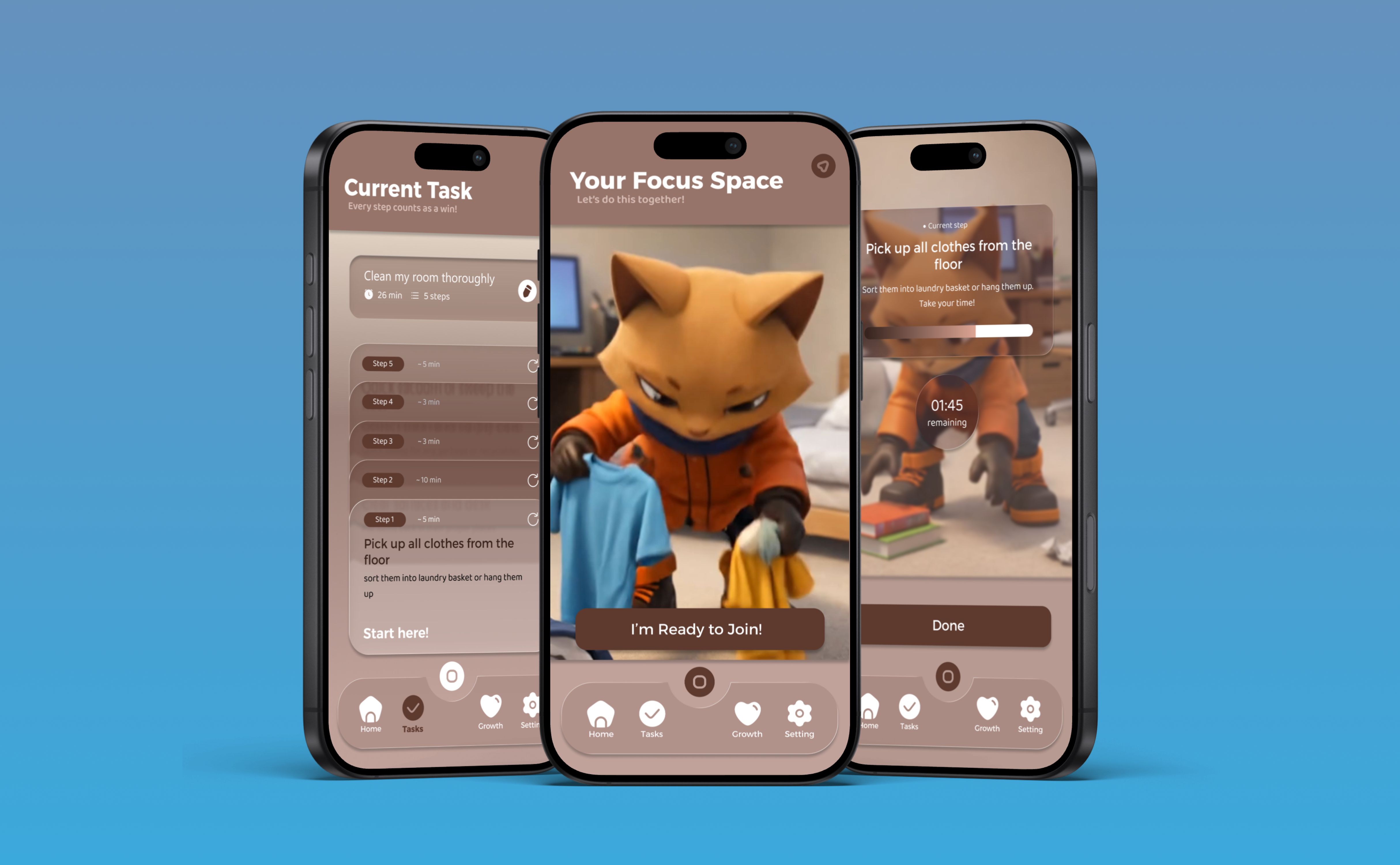
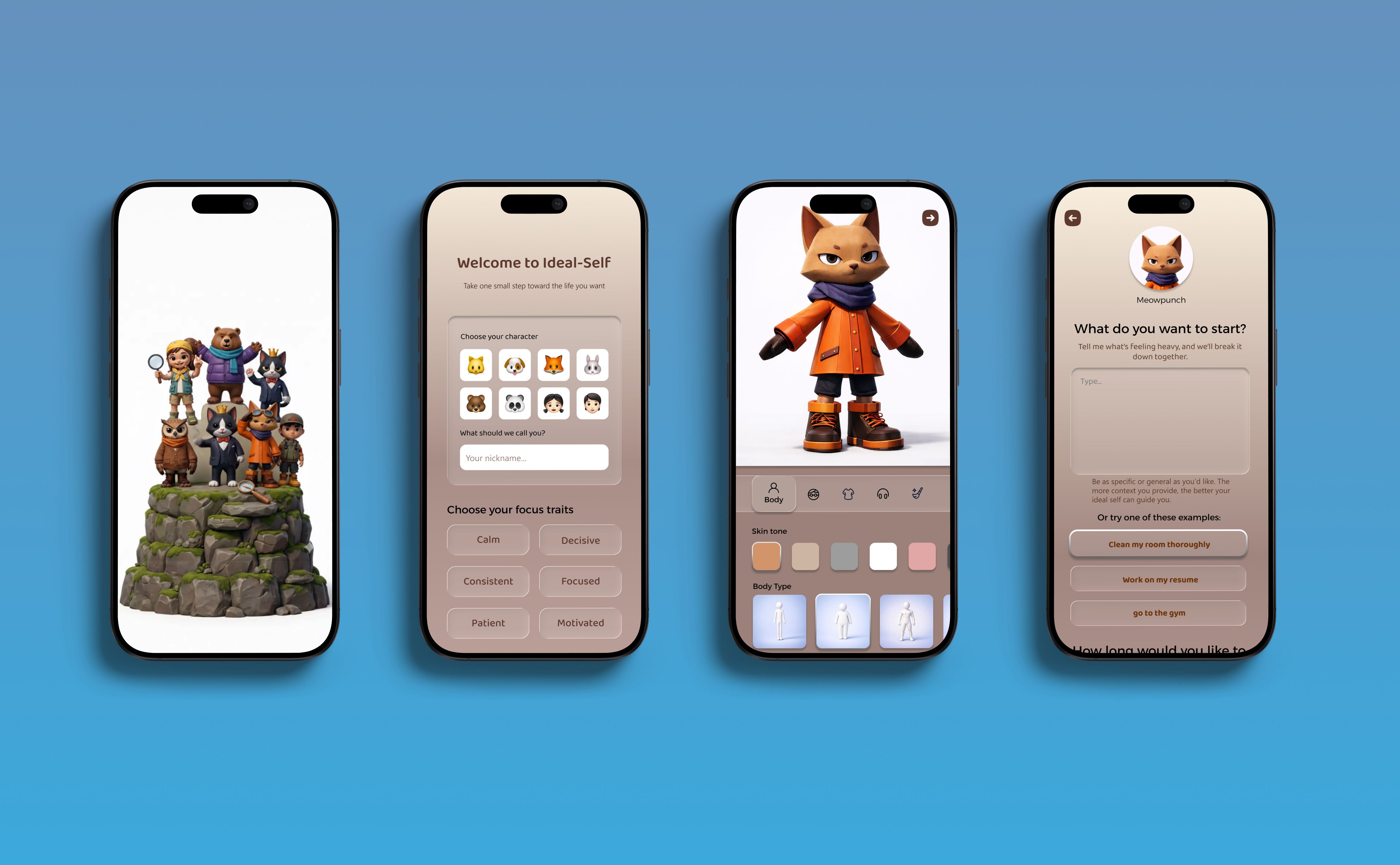
My biggest aha moment was realizing the Ideal Self should not just represent who the user wants to become, but also model how that person begins. The Ideal Self should provide structure and presence without becoming controlling. The Ideal Self should perform the user's same next step first as a companion. This vision changed the project from a planning tool into an observe-then-join experience, where users watch their companion perform the same AI-broken next step, feel that someone has started with them, and join when they feel ready. The Ideal Self was no longer a decorative avatar or a voice giving advice, it became a visible bridge between intention and action. That insight made the whole project feel distinct and meaningful to me.
Where do you see yourself and the project in the next five years?
In the next five years, I would love to develop Ideal Self into a larger avatar-based universe for self-growth. Beyond having an individual companion, users could discover nearby people through their avatars, find others working toward similar goals, and form small, supportive communities. They could study or work together, share encouragement, and feel a sense of presence without the pressure of constant conversation or social media. I imagine personal rooms gradually connecting into a wider world where users, avatars, spaces, and communities grow together. I would continue testing how these social features support accountability while protecting privacy and keeping the experience calm, optional, and focused on meaningful progress.