Designers
Mechthild Pfütze
Year
2026
Category
New Talent
Country
Germany
School
HTW Berlin – University of Applied Sciences
Teacher
Franziska Schuh
Three questions to the project team
What was the particular challenge of the project from a UX point of view?
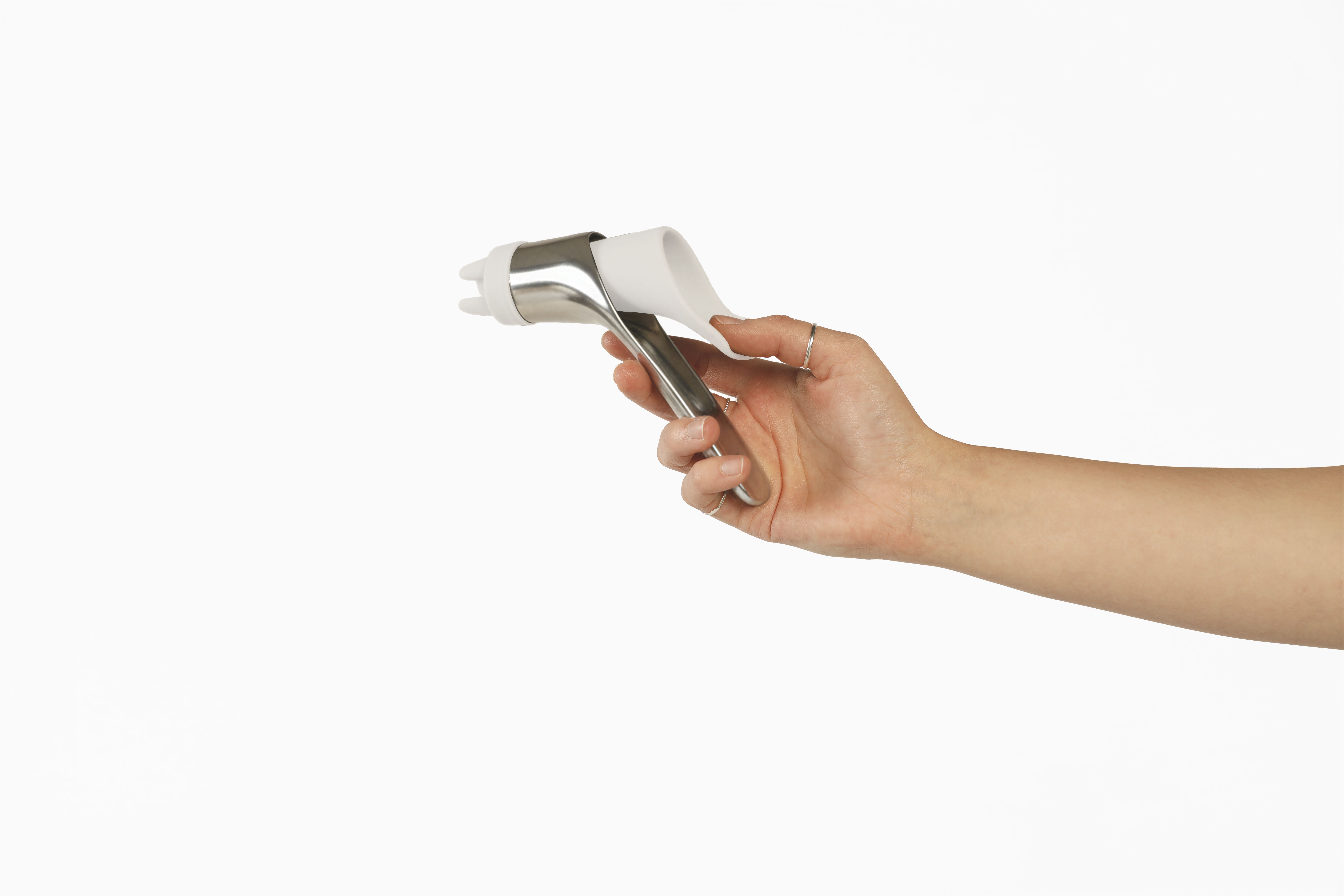
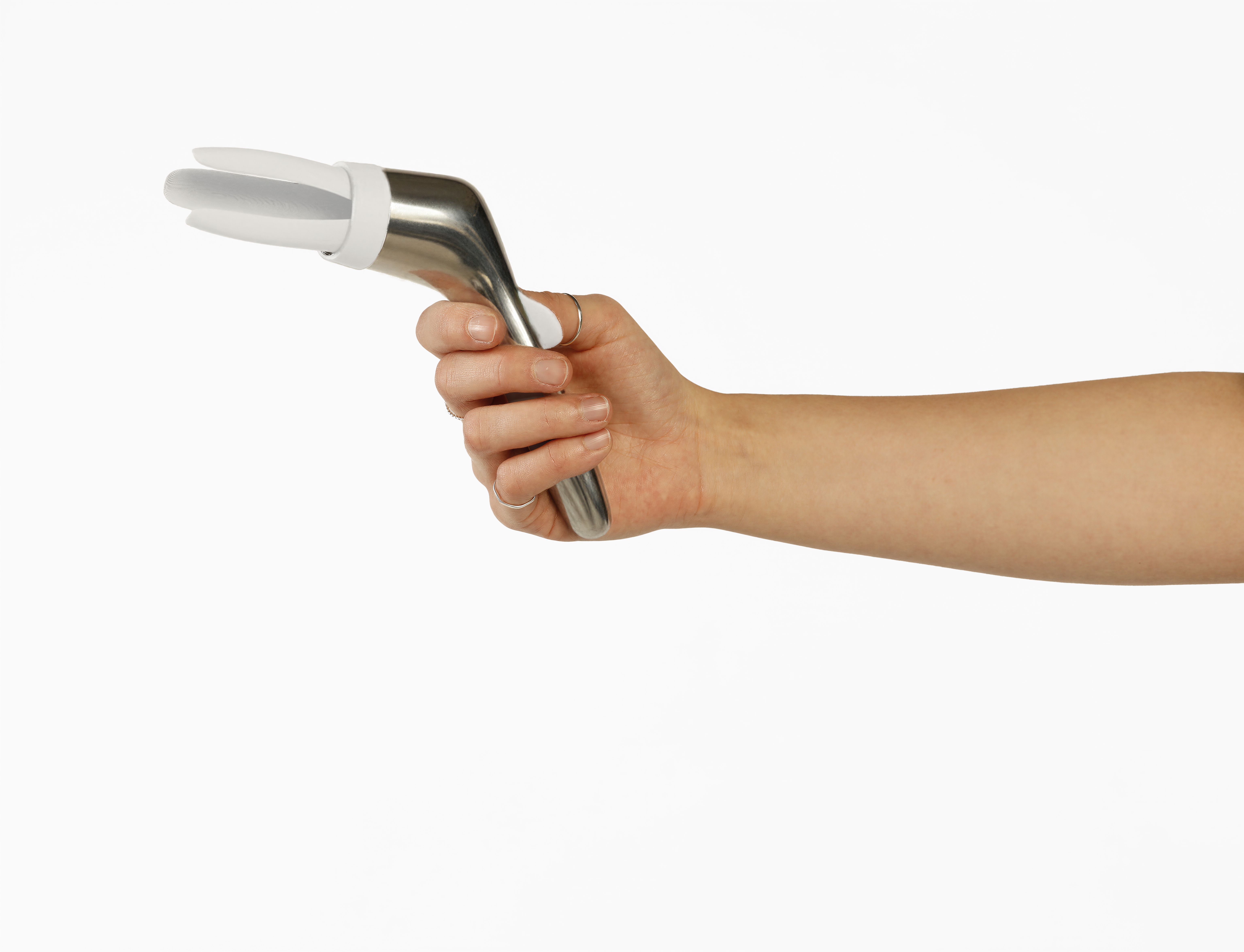
The core UX challenge was designing for an inherently vulnerable, asymmetric situation. Patients have little control during the examination, cannot see what is happening, and often feel exposed, while the instrument must remain fully functional for medical staff. Balancing emotional needs against clinical requirements was the central tension throughout. A further challenge was designing for highly diverse user needs: patients with vaginismus, first-time patients or trans individuals all have different triggers. Research also showed that many patients are unfamiliar with the speculum itself, adding fear of the unknown. Freya had to address both the physical experience and this lack of transparency, without compromising medical effectiveness.
What was your personal highlight in the development process? Was there an aha!-moment, was there a low point?
One of the most meaningful moments throughout this project was the reaction of people around me. From the very first idea to the final product, friends, family, and even strangers approached me to say how important they found it that someone was redesigning this overlooked instrument. That encouragement carried me through the whole process. A low point was realizing that, despite all improvements, the examination will likely always remain somewhat uncomfortable, Freya still has to function as a real medical instrument. But the most effective way to reduce discomfort is simply talking about it. This was confirmed to me by the gynecologists I spoke with, and it's exactly why I want this project to receive attention.
Where do you see yourself and the project in the next five years?
This project is something I genuinely care about, and I plan to keep working on it beyond my bachelor's thesis. More broadly, I want to continue engaging with women's health and its place in medicine and design — a field that still doesn't get the attention it deserves. It's hard to predict exactly where I'll be in five years, but I hope that by then, Freya — or a concept like it — will be on the market, helping to make gynecological examinations a little more comfortable and human.