Designers
Linjia Yuan, Kexin Li, Jianye Ning, Yue Pan, Tianyi Guo, Xiaoxue Chen
Year
2026
Category
New Talent
Country
United Kingdom
School
Goldsmiths University of London
Teacher
Dr. Rabail Tahir
Three questions to the project team
What was the particular challenge of the project from a UX point of view?
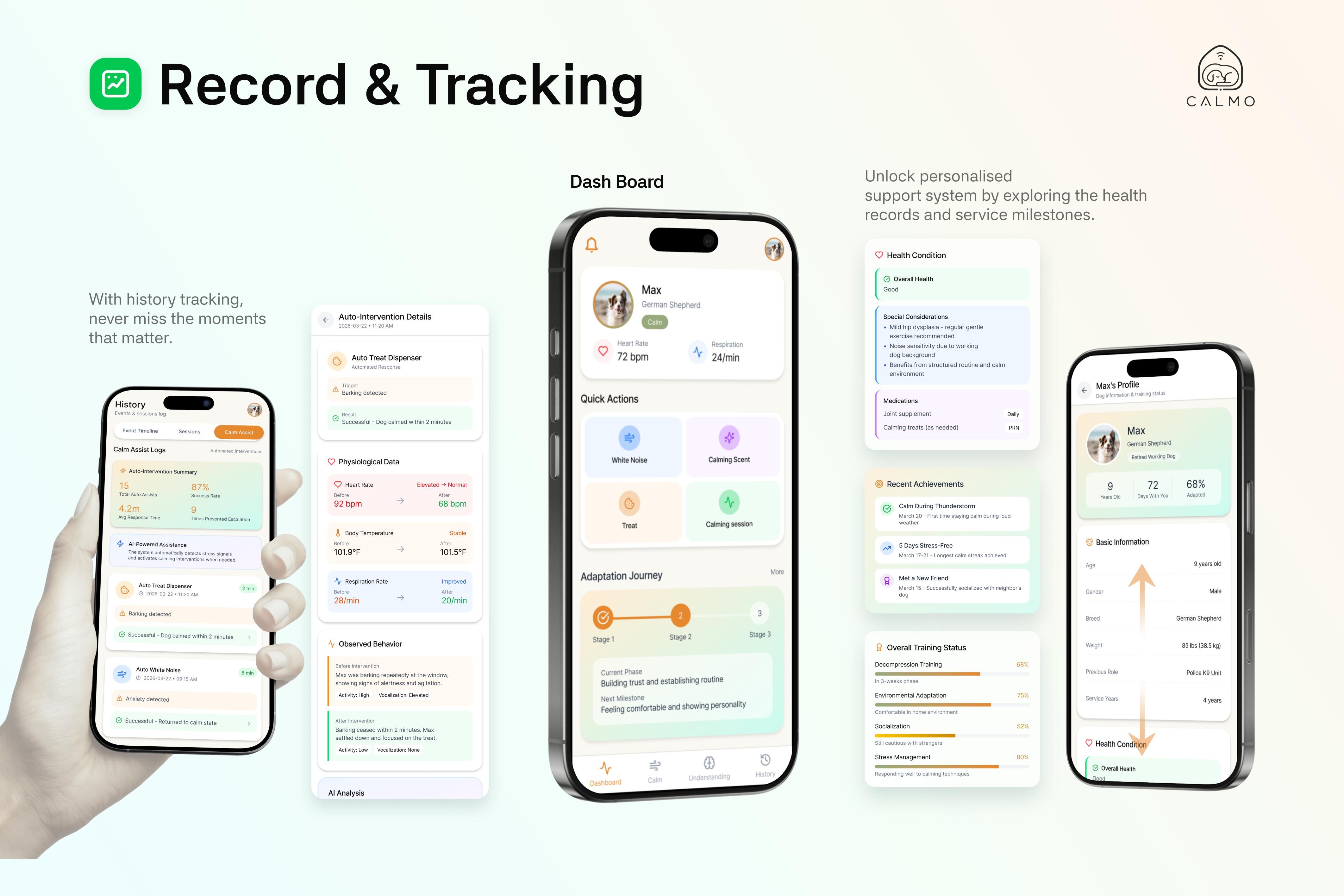
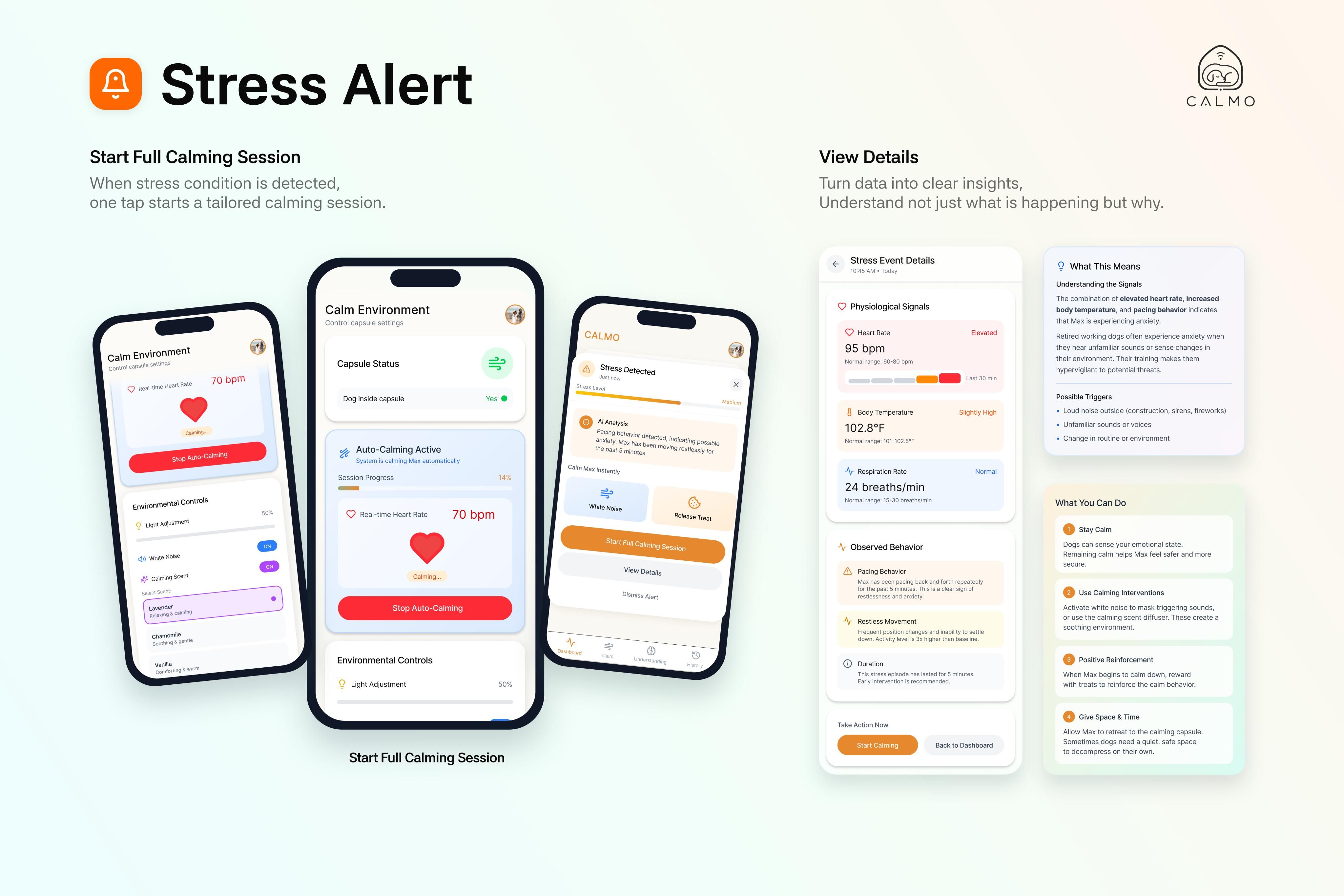
One of the biggest UX challenges was designing for a specialised group in an unexplored market. Retired police dogs face unique transition needs, yet few products or services address this context. This left us with few comparable references and limited UX patterns to build on. The dogs also cannot directly communicate their experiences, while trainers, police organisations and adopters each offer only a partial view. The project therefore required synthesising varied insights while balancing monitoring accuracy, household privacy, technical feasibility and commercial viability. Key decisions emerged from these trade-offs, including non-contact sensing, privacy-preserving depth cameras and a staged support model for real adoption contexts.
What was your personal highlight in the development process? Was there an aha!-moment, was there a low point?
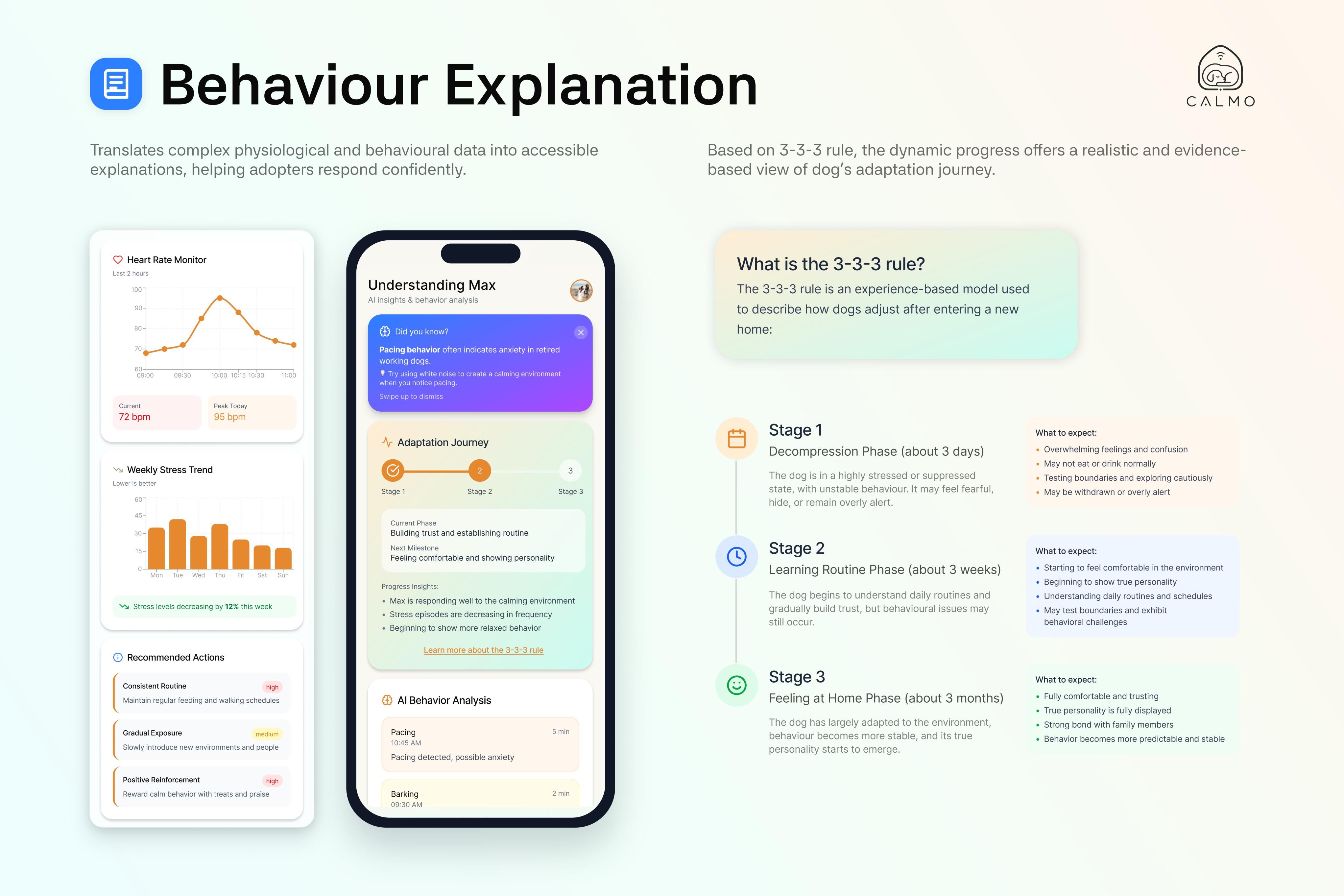
Our biggest aha moment came during an interview with a professional dog behaviour trainer. Our initial concept assumed that all retired police dogs would follow a similar transition journey and benefit from the same support process. The trainer challenged this assumption, explaining that dogs differ significantly in temperament, sensitivity, and adaptation speed. This prompted us to revisit our research and explore the well-known 3-3-3 adoption principle. Rather than adopting it as a rigid timeline, we reinterpreted it as a flexible progression based on behavioural milestones. This shift transformed the project from a one-size-fits-all solution into a personalised transition support system and became a key turning point in the design.
Where do you see yourself and the project in the next five years?
In the next five years, CALMO could evolve from a concept for retired police dogs into a wider ecosystem for canine emotional wellbeing. In the first three years, the focus would be on partnerships with police organisations, adoption centres, trainers and charities, building a pathway from retirement to home adaptation. With more data and field feedback, it could provide personalised support for different profiles and stress needs.
In later years, CALMO could expand to rescue dogs, anxious dogs and working dogs needing recovery training. By combining behaviour recognition, human-dog understanding and proactive calming support, it could become a scalable framework for improving wellbeing and communication across canine care settings.