Designers
Jiayi He
Year
2026
Category
New Talent
Country
China
School
Nankai University
Teacher
Zhanling Feng
Three questions to the project team
What was the particular challenge of the project from a UX point of view?
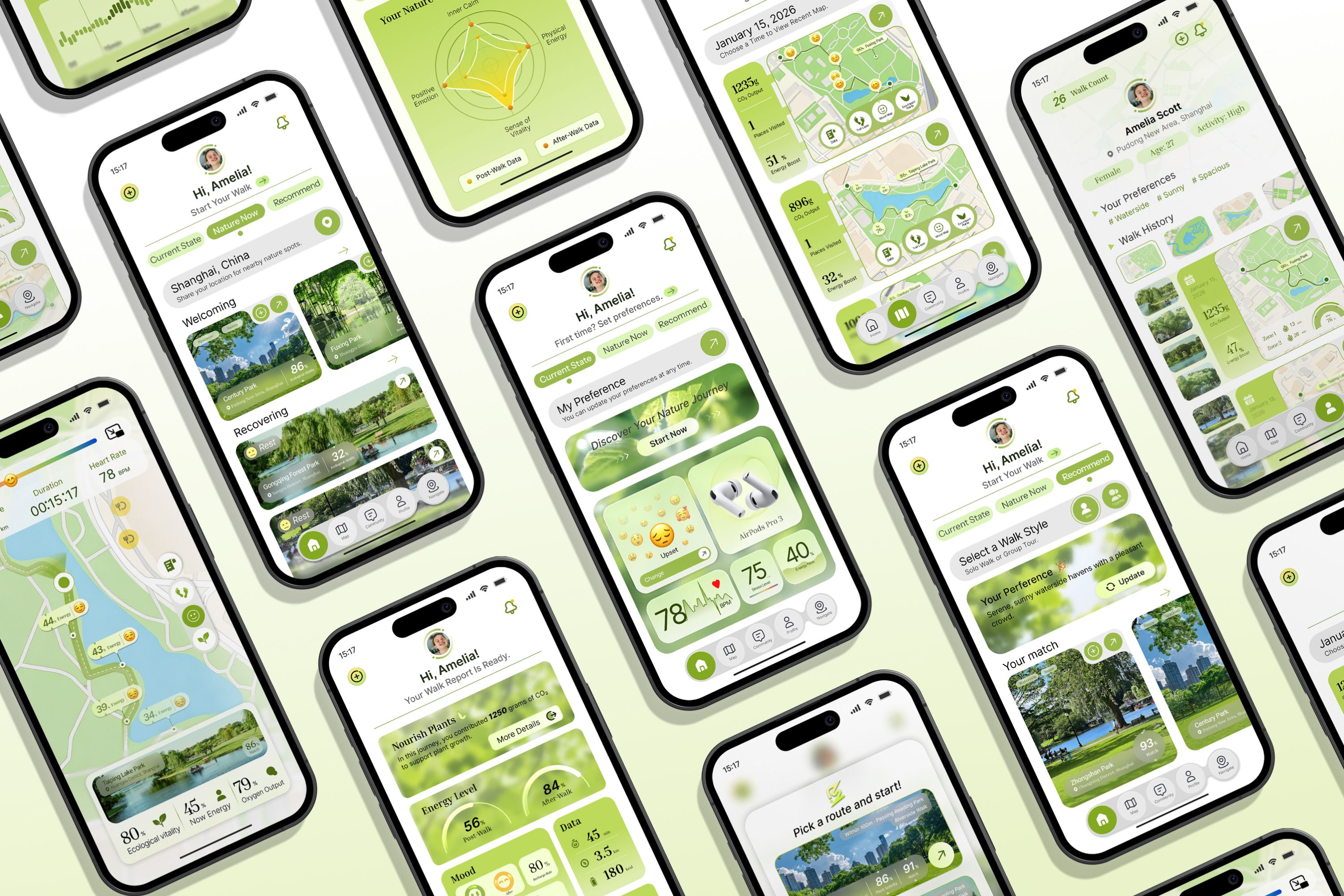
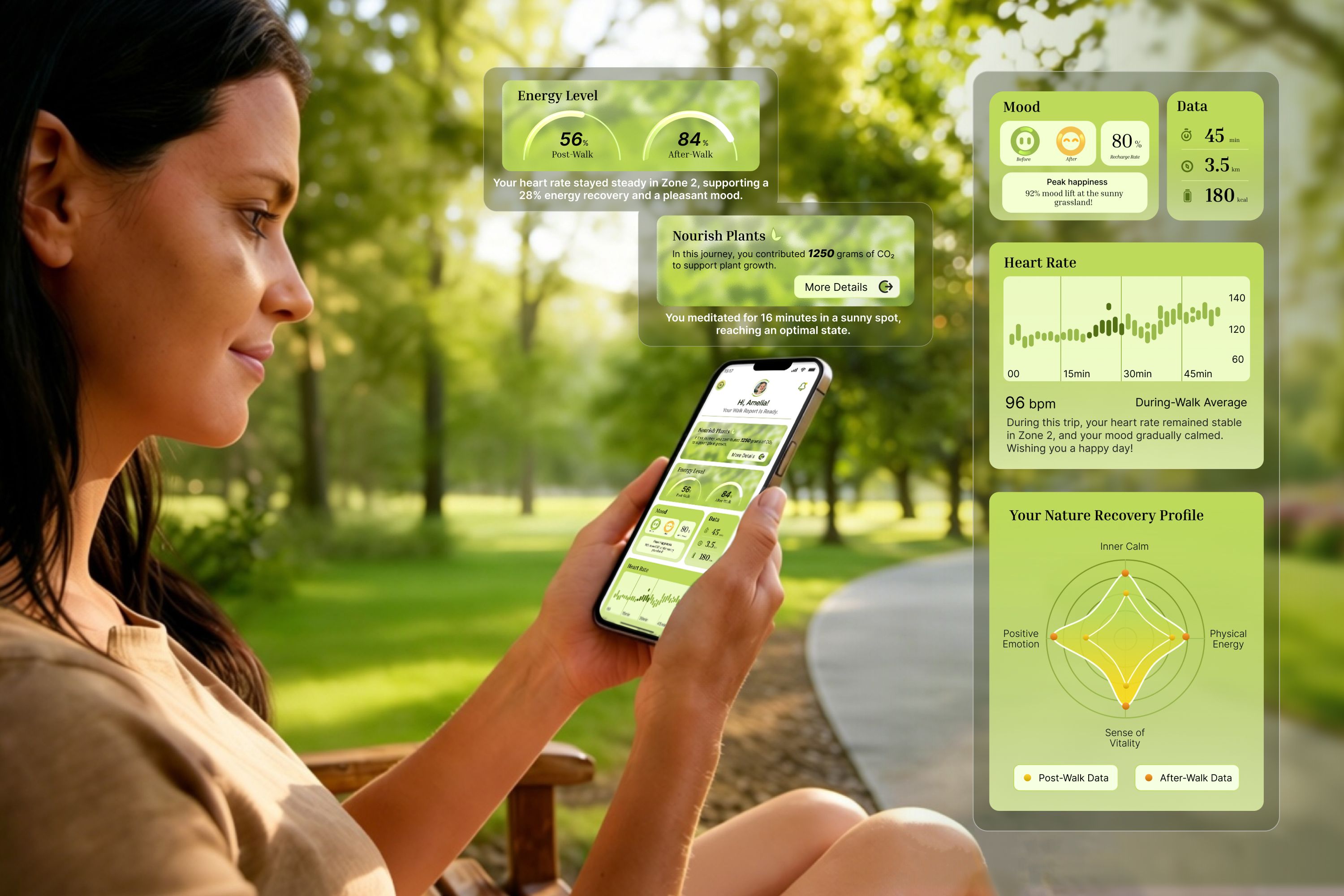
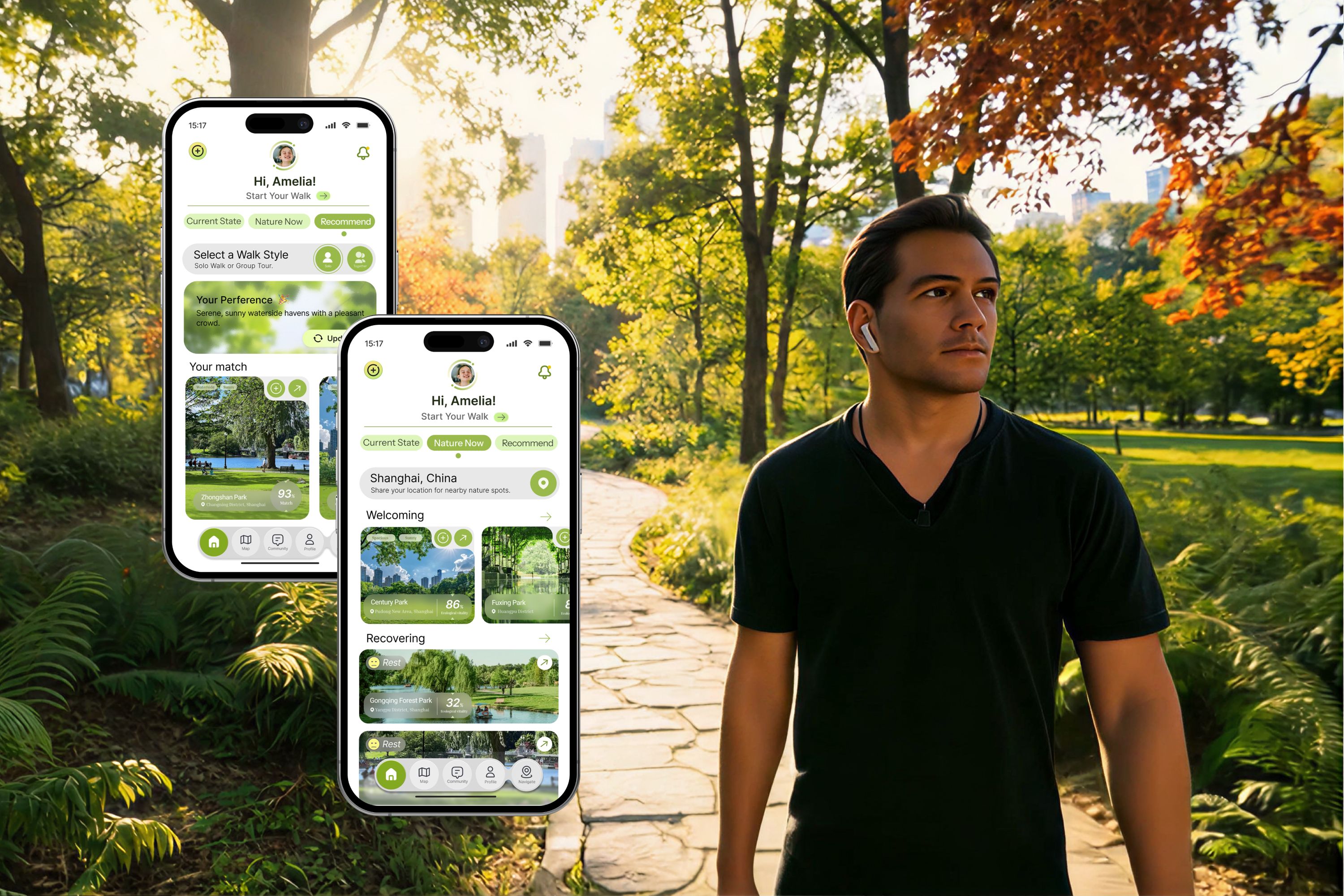
The core challenge was making invisible ecological states perceivable and actionable without adding cognitive burden. Traditional navigation optimizes for efficiency alone, but BioTrek needed users to intuitively grasp something as abstract as this green space needs to rest. We consolidated vegetation health, visitor load, environmental quality, and recovery time into an Ecological Vitality Index (EVI). Routes are filtered by EVI before the walk begins, during it, EVI translates into subtle headphone audio, no screen needed. Users make eco-conscious choices without realizing it. Finding the balance between invisible enough and effective enough was the hardest design problem we faced.
What was your personal highlight in the development process? Was there an aha!-moment, was there a low point?
My highlight was building a genuine bridge between design and ecology. The aha moment came during field research: measuring plant vitality across 13 green spaces, while recording our own feelings at each site. The lowest-photosynthesis locations were exactly where we instinctively wanted to leave. A connection between human avoidance behavior and plant physiological activity became visible. Plants have states, and people can sense them shifted from intuition to a data-backed design foundation. The low point was integrating three systems, physiological, ecological, and behavioral data, and the discipline required during iteration: constantly returning to core functions rather than adding complexity.
Where do you see yourself and the project in the next five years?
Short-term: complete user validation in universities and tech companies, and partner with research institutions to publish studies supporting the EVI model.
Mid-term: collaborate with wearable brands to expand data at scale, and work with green-space authorities so EVI genuinely enters urban planning decisions.
Long-term: BioTrek becoming more than an app—a starting point for 'ecological vitality' entering everyday thinking, so people naturally ask 'how is this green space doing today?' before a walk.
For me personally, this project opened a direction I want to keep pursuing: how human behavior can create genuine, healthy interactions with natural systems.