Designers
Carmela Domingues
Year
2026
Category
New Talent
Country
Portugal
School
IADE
Teacher
Sara Gancho
Three questions to the project team
What was the particular challenge of the project from a UX point of view?
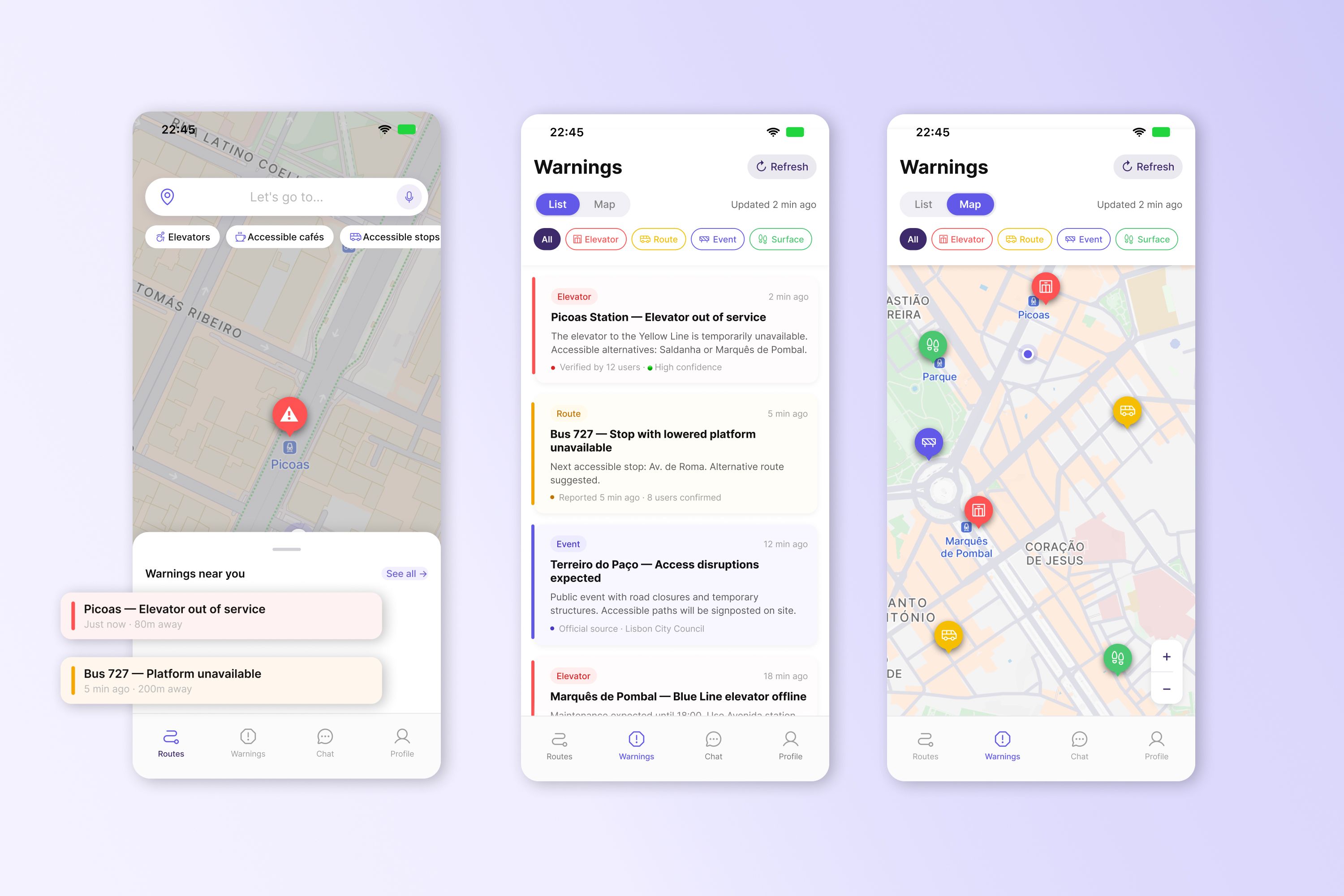
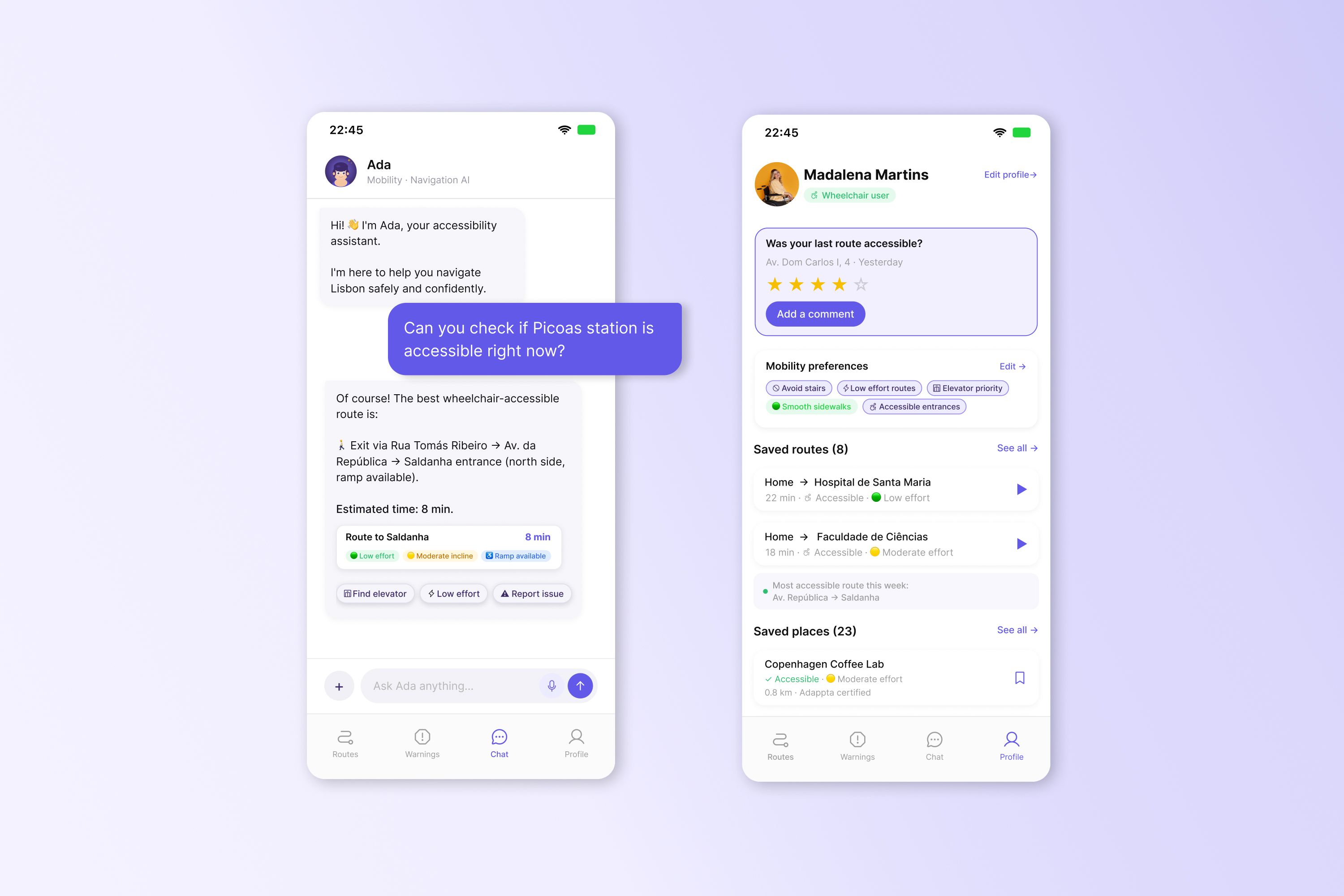
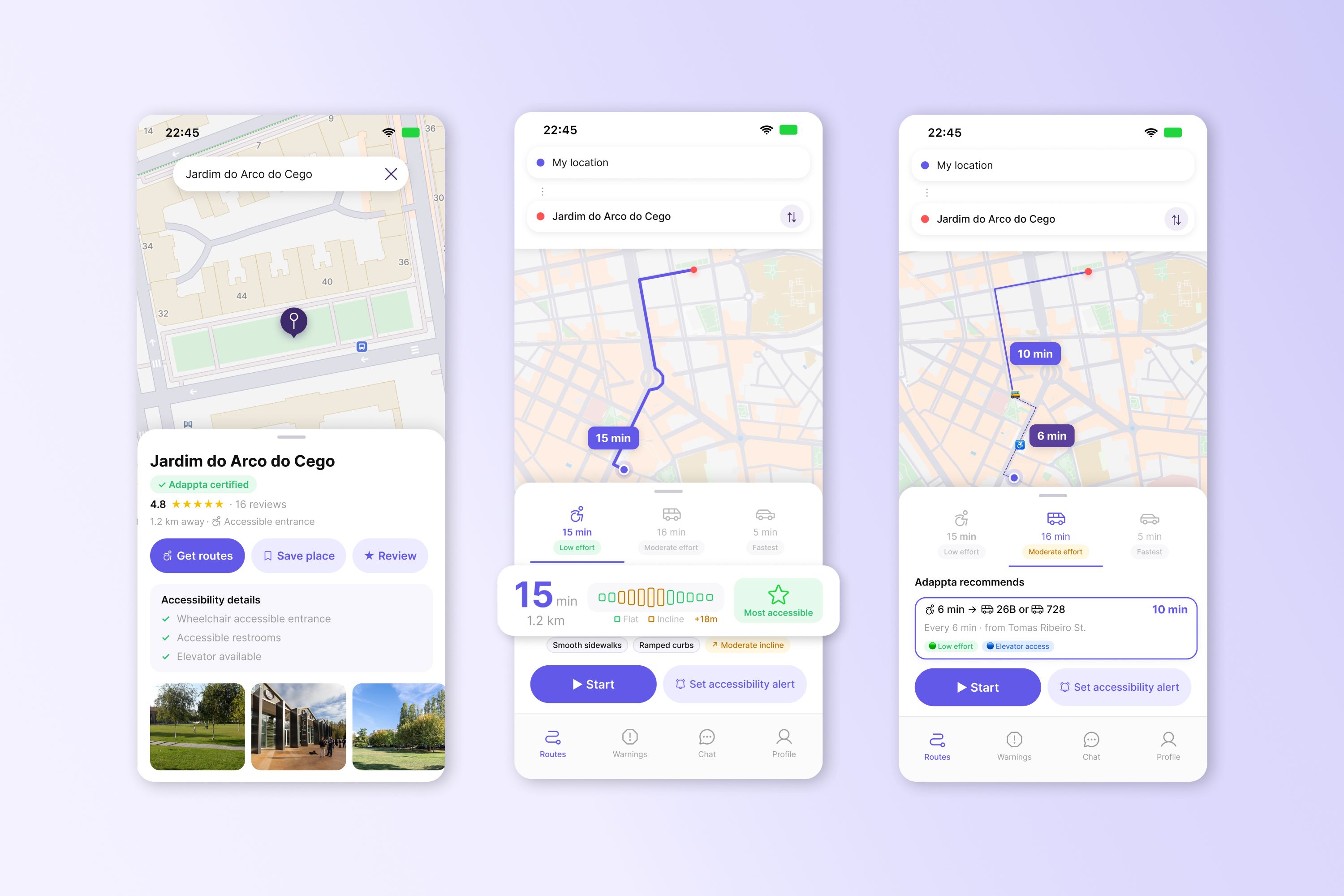
The main challenge was designing for a context where accessibility conditions are constantly changing and unpredictable. Unlike standard navigation, wheelchair users face barriers that can appear at any moment, for example, an elevator out of service, a construction blocking a ramp, or a bus stop suddenly unavailable. Designing for this uncertainty meant rethinking what reliable navigation actually means for this audience. The solution could not simply show a route and assume it would remain valid. It had to anticipate change, communicate disruptions in real time, and provide users enough information to make their own decisions before and during the journey.
What was your personal highlight in the development process? Was there an aha!-moment, was there a low point?
The clearest highlight came during the user interviews. Before talking to wheelchair users directly, there was a reasonable understanding of accessibility barriers, but the conversations revealed something much more specific. An elevator out of service can completely disrupt someone's day because it makes a metro station inaccessible, forcing them to rethink the entire journey. Participants also shared experiences of being refused rideshare rides when drivers saw they used a wheelchair. These were not edge cases, they were part of everyday life. That shifted the whole approach, from designing for convenience to designing for autonomy, and it also entirely changed the perception of what an accessible city actually means.
Where do you see yourself and the project in the next five years?
Access to the city, to culture, to everyday life, should not depend on whether an elevator is working that day. Non-wheelchair users rarely think about such issues. The interviews made it impossible to ignore. In five years, the goal is to see Adappta developed into a real product, built in partnership with municipalities and mobility organisations, and used by people who currently have to plan their entire day around infrastructure that was never designed with them in mind. Professionally, the aim is to keep working on projects where design decisions have real consequences for real people.